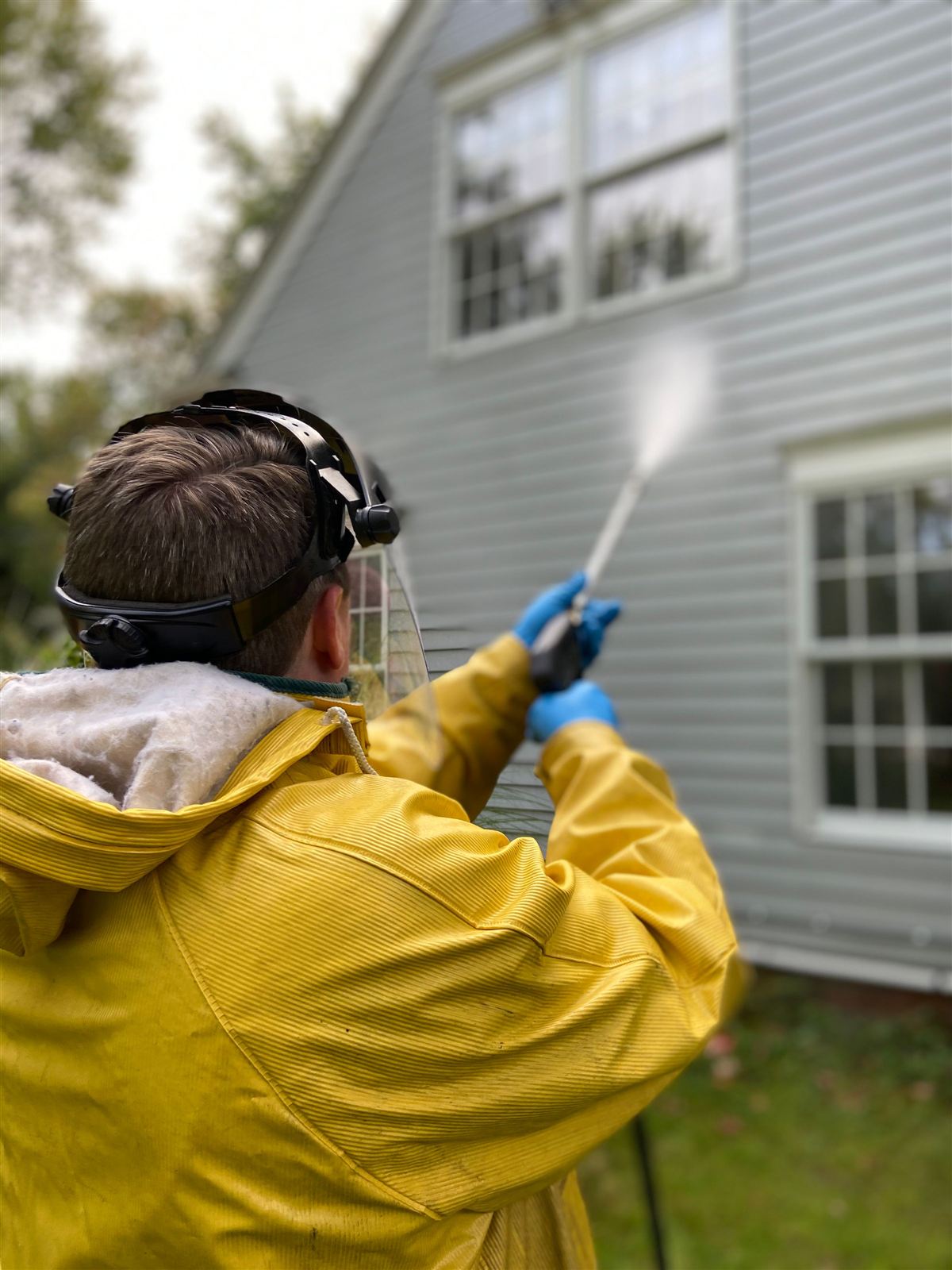
During a soft wash, rinse water runs down the wall and drains onto the ground around the house, so the plants near the wall are what matter most. At JB Powerwash Services, the crew walks the property first, protects landscaping near the wash zone and rinses the area afterward. Here is what that looks like.
Where does the rinse water go during a soft wash?
The water runs off the surface you are cleaning and lands on the ground at the base of the house. It follows the slope of the yard, so flat beds and low spots can collect it. That is why the area right along the foundation gets the most attention.
A soft wash uses low pressure to clean siding, stucco and other delicate surfaces. It is a gentler method than a high-pressure blast. Even so, whatever comes off the wall, along with the rinse water, ends up near your beds and walkways.
This is the question behind many searches for an eco-friendly wash. Homeowners want to know where the water goes and what it touches. We cannot make claims about what any product does to a yard, so we focus on what we can control: the prep, the rinse and the care taken around your plants. Our house washing service follows that routine.
What gets covered or protected before the wash starts?
Before the wash, the crew walks the property and looks at what sits near the wash zone. Then we protect landscaping and plants that are close to the house. The goal is to handle them first, not after something goes wrong.
The walk-through usually covers a few things:
- Shrubs, flowers and small trees that sit against or near the wall.
- Garden beds, edging and mulch along the foundation.
- Potted plants, hanging baskets and decor that can be moved.
- Lawn areas that touch the wall or the driveway.
- Nearby fixtures like outdoor outlets, lights and AC units.
Items that can move are moved out of the way. Plants that stay are covered or wet down before the wash starts. How we do this depends on the plant and the space. A tall hedge needs different care than a small bed of flowers.
Why does the rinse afterward matter for the yard?
The rinse afterward clears leftover residue from the plants and the ground near the wall. It is the second half of the protection, not an extra. A wash with no rinse leaves the cleaned surface and the nearby beds with whatever was left behind.
After the wash, JB Powerwash rinses the area again. That includes the plants and landscaping that were near the wash zone, plus the ground and walkways next to the wall. It helps the yard look clean as well as the house.
If your yard has a low spot near the wall, mention it. Water that pools can sit longer, and a quick extra rinse of that spot makes sense. The more the crew knows about how your yard drains, the better the job goes.
What should you tell the crew about your plants and beds?
Tell the crew which plants matter most to you, and point out anything delicate. You know the yard better than anyone, so a quick comment before we start can change how we prep. We would rather hear it than guess.
Here are some details worth sharing during the walk-through:
- Plants you planted recently or that are still getting established.
- Favorite shrubs, trees or flowers you want extra care around.
- Vegetable or herb gardens near the house.
- Spots where water collects after rain.
- Pets or children who use the yard, and when they will be outside.
- Any irrigation heads or lines along the wall.
Move what you can before we arrive, such as pots and small decor. It gives the crew more room and keeps those items out of the wash zone. If you have questions about how plants and washing mix, our post on whether pressure washing is safe for plants goes into more detail.
What should you ask any company about runoff?
Ask what they do before the wash and after it. A good company can tell you how it protects the yard, what it does with the rinse and how it handles questions. If the answer is vague, that is worth noting.
These questions are a good start:
- Do you walk the property before you start?
- How do you protect plants and beds near the wall?
- What do you do after the wash to rinse the area?
- Who do I talk to if I see a problem?
- How should I prepare the yard?
Be careful with promises that sound too big. Any company that says its wash is risk-free for every plant is claiming more than it can know. We prefer to explain what we do and let you decide.
JB Powerwash Services is based in Port St. Lucie, FL, and serves Port St. Lucie and St. Lucie County. We use soft washing for roofs and delicate surfaces. You can also see where we work on our Fort Pierce page.
If you are planning a house wash in Port St. Lucie, Tradition or St. Lucie West, call JB Powerwash at 954-652-9551 for a free estimate. Tell us about your plants and beds, and we will plan the wash around them.
Frequently Asked Questions
Do I need to water my plants before a soft wash?
You do not need to do anything special. The crew handles prep as part of the visit. If you have delicate or new plants, tell us during the walk-through so we can give them extra attention.
Will the rinse water reach my lawn?
Some of it can, since water follows the slope of the yard. The crew rinses the area afterward, including nearby landscaping. Tell us about low spots or lawn areas touching the wall so we can plan for them.
Should I move potted plants before the crew arrives?
Yes, if you can. Moving pots, baskets and small decor away from the wall gives the crew room to work and keeps those items out of the wash zone.
Does JB Powerwash use soft washing for roofs too?
Yes. We use soft washing for roofs and delicate surfaces. It is a lower-pressure method that suits materials a strong blast could damage.