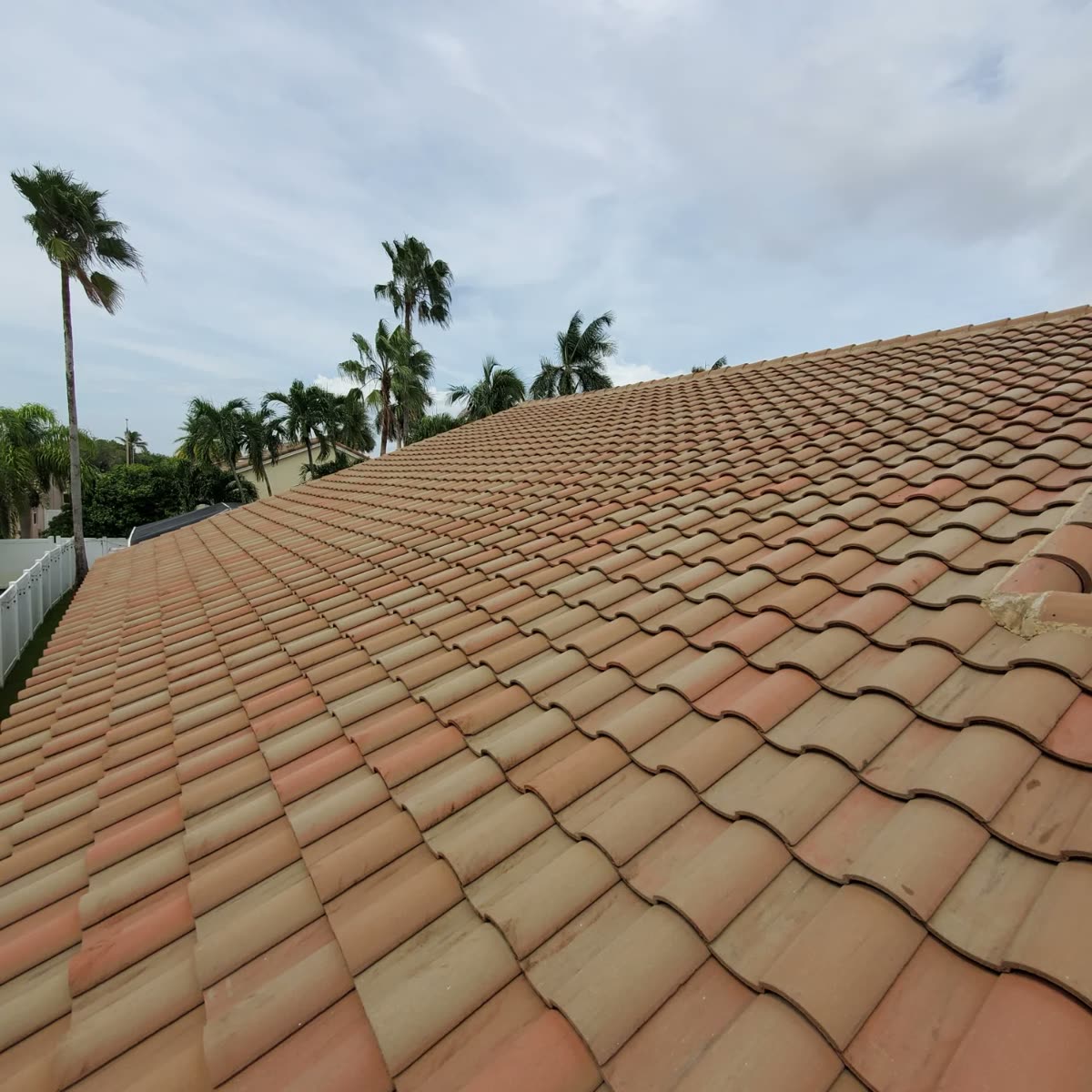
Dark streaks on your shingles are the first sign that algae has taken hold, and they usually start on the shaded and north-facing sections first. The longer the roof waits, the more the streaks spread. JB Powerwash Services explains what to look for on our roof cleaning page, and this checklist covers the signs you can see from the ground.
What does the first sign of roof algae look like?
The first sign is a faint gray or dark streak on a few shingles. It often looks like dirt running down the roof, but it is a living growth that stays put.
At first the marks are small and easy to ignore. Over time they darken and join together. That is how a few spots turn into long black streaks across the roof.
Which side of the roof shows it first?
The algae takes hold in the shaded and north-facing sections first. These areas stay damp longer and get less direct sun, which gives algae a better place to grow.
Look at the sides of the roof under trees, next to a taller part of the house, or facing north. Streaks there are the earliest warning. Sunny, south-facing sections tend to look cleaner for longer.
Can you see it from the street?
Yes, in most cases you can. Walk to the street or the far side of the yard and look at the whole roof, since marks are easier to spot from a distance than up close.
Use this checklist while you look:
- Dark or black streaks running down the slope of the roof.
- Patches that look dirty even after a rain.
- Streaks that start under trees or in shaded valleys.
- A color difference between the north and south sides of the roof.
- Stains that run from the ridge down toward the gutters.
- Green or brown fuzzy patches in the corners and along edges.
- Dark marks on the shingles that sit near the roof vents or chimney.
- Staining that keeps getting wider each season.
If you check off two or three of these, the algae is likely established. A closer look from a professional can tell you what you are dealing with. Our related post on black streaks on roofs in Port St. Lucie goes into the streaks in more detail.
Do not climb on the roof to check. A wet or algae-covered roof is slippery, so stay on the ground and use binoculars or your phone camera to zoom in.
What changes if you wait another season?
If you wait, the streaks usually spread to more of the roof and the cleaning job gets bigger. Algae that has spread across a larger area is harder to treat than a few small spots.
Florida heat and humidity keep the growth going. A section that looks like a small stain now can cover far more of the roof after another rainy season.
This is why checking early helps. A roof that is only lightly streaked is a simpler job than one that is covered from ridge to eave.
What should you check before calling for an estimate?
Before you call, take a few photos from the ground and note which sides of the roof look worst. That gives us a quick picture of the job.
It also helps to know:
- Which sections have streaks and which look clean.
- Whether trees shade the roof.
- How long you have noticed the stains.
- Whether the roof is shingle, tile or another type.
JB Powerwash Services uses soft washing for roofs and delicate surfaces. Soft washing is a gentler way to clean than a hard blast of water. We serve Port St. Lucie and St. Lucie County, including Tradition, St. Lucie West, Fort Pierce, Stuart and Palm City.
Spotted streaks on your roof? Call JB Powerwash Services at 954-652-9551 for a free estimate, or send your photos through the contact page.
Frequently Asked Questions
Are the black streaks on my roof dirt or algae?
Dark streaks that run down the slope and keep coming back after rain are usually algae, not plain dirt. They tend to start in shaded areas and spread over time.
Should I climb on the roof to look at the stains?
No. A roof with algae can be slippery, especially when damp. Check from the street or yard, and use your phone camera to zoom in on the problem areas.
Does JB Powerwash use soft washing on roofs?
Yes. JB Powerwash Services uses soft washing for roofs and other delicate surfaces, which is gentler than a high-pressure blast of water.