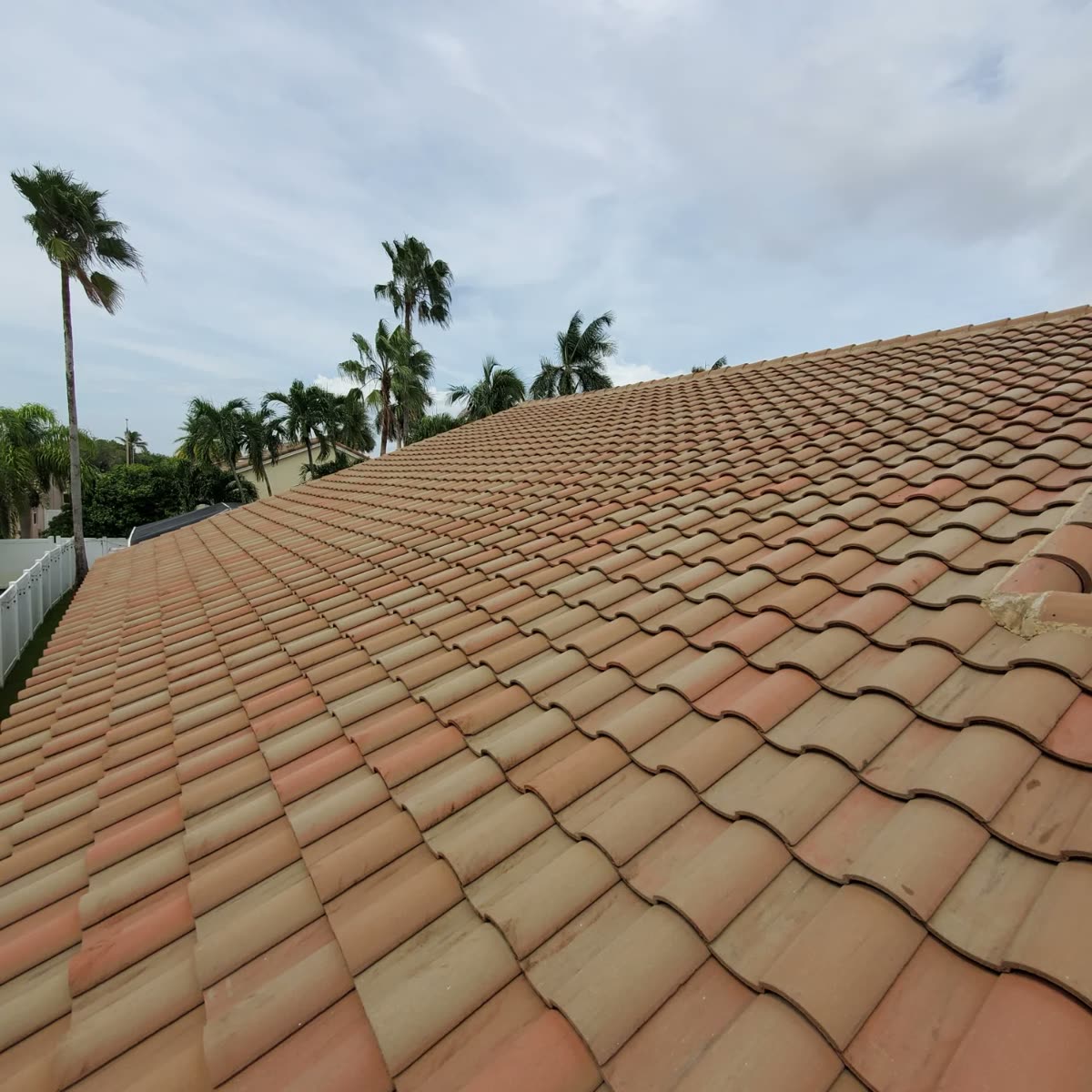
Those black streaks on your roof are usually algae, not dirt. The culprit is a blue-green organism called Gloeocapsa magma. It thrives in warm, damp Florida weather, and it can stain shingles and tile for a long time if no one deals with it.
What Is the Black Streak on Your Roof?
Gloeocapsa magma is a type of cyanobacteria. Many people call it roof algae. It is not the same as the green moss you may see on lawns or shady patios. This organism makes a dark pigment that protects it from strong sunlight. That pigment is what makes the streaks look black or dark gray.
The spores are tiny. Wind carries them from tree to tree and house to house. When a spore lands on a roof that stays damp, it starts to grow. Over time, it forms thin lines that run down the slope. Many homeowners first notice them after a long wet season.
Why Port St. Lucie Roofs Get Them
Port St. Lucie sits in a hot, humid part of Florida. We get frequent summer rain and long stretches of moist air. Roofs in Tradition, St. Lucie West, Fort Pierce, Stuart, Palm City, and Jensen Beach face the same conditions. Warm temperatures and moisture give roof algae exactly what it needs.
Shade plays a role too. Tall oaks and palms block the sun. Their leaves and branches hold water near the roof surface. A roof that dries slowly is a roof that grows algae faster.
Why North-Facing Roofs Get It First
If you only see streaks on one side of your roof, check which way it faces. In most Florida homes, the north-facing slope gets the least direct sun. It stays damp longer after rain and morning dew. Sunlight dries the south and west slopes quickly. The north side stays wet and dark, which is exactly where roof algae likes to grow.
Homeowners often think the streaks are dirt left by a storm. Check the pattern. Algae streaks run straight down the roof from the ridge line. They often start near the top edge and keep going toward the gutters. A quick look from the yard, or a zoomed photo from your phone, can help you see the pattern clearly.
Does Roof Algae Damage Shingles or Tile?
Roof algae is more than a cosmetic problem. Many asphalt shingles contain limestone filler. Algae feeds on the calcium carbonate in that filler. As it grows, it can break down the surface of the shingle. The protective granules may loosen. The shingle can then dry out, curl, or wear down faster than it should.
Concrete and clay tile face a similar issue. Algae holds moisture against the tile surface. That moisture can work into small cracks and under the glaze. Over time, the tile may look worn, and the roof may lose some of its protection.
Algae also holds moisture against the roof deck. Constant dampness is hard on the wood underneath. This is why a clean roof matters, not just a pretty one.
Why Pressure Washing Is the Wrong Fix
Many people reach for a pressure washer. That is a mistake. High pressure can knock off the granules on asphalt shingles. It can crack tile and lift the edges of shingles. It can also force water under the roofing material. A roof that looks clean after a hard blast may be damaged.
Some homeowners try bleach on their own. Bleach can harm plants, siding, and metal. It also does not always reach the roots of the algae. The streaks often return within a short time. Gentle methods protect the roof better.
How Soft Washing Removes Roof Algae
A soft wash uses low pressure and a cleaning solution made for roofs. The solution is applied to the surface and given time to work. It kills the algae at the source. Then the residue is rinsed away gently. This method is safer for shingles and tile than high pressure. It also reaches the spots a pressure washer would miss.
Before any cleaning, a good crew should look at the roof first. They check the shingle or tile type, the pitch, and how heavy the streaking is. That helps them choose the right approach. Ask questions if something seems unclear. A clear plan should feel easy to follow.
At JB Powerwash Services, we use soft washing for roofs and other delicate surfaces. We take care around plants, windows, and landscaping. Learn more about our roof cleaning services. For a deeper look at how the process works, read our guide on soft wash roof cleaning in Port St. Lucie.
Keeping the Streaks From Coming Back
- Trim branches so sunlight and air can reach the roof.
- Clear leaves and debris from the roof and gutters.
- Look for stains after a wet season and act early.
- Ask your roof cleaner about zinc or copper strips near the ridge line, which can slow new growth.
Ready to get rid of those streaks? JB Powerwash Services offers free estimates for homes across Port St. Lucie and St. Lucie County. Call us at 954-652-9551 to schedule a visit and talk about your roof.
Frequently Asked Questions
Is the black streak on my roof mold?
Usually it is not mold. The streaks are most often Gloeocapsa magma, a cyanobacteria that grows on damp roofs. Either way, a soft wash can clean it off.
Will rain wash the streaks away?
Usually not. Rain does not kill the organism. Spores keep landing on the roof, so the streaks often come back.
Can I clean roof algae myself?
You can try, but high pressure and harsh chemicals can damage shingles and tile. A gentle soft wash is safer for most roofs.
How do I know if my roof needs cleaning?
Look for dark streaks running down the slope, especially on north-facing sections. If you see them, ask a local roof cleaner for a free estimate.