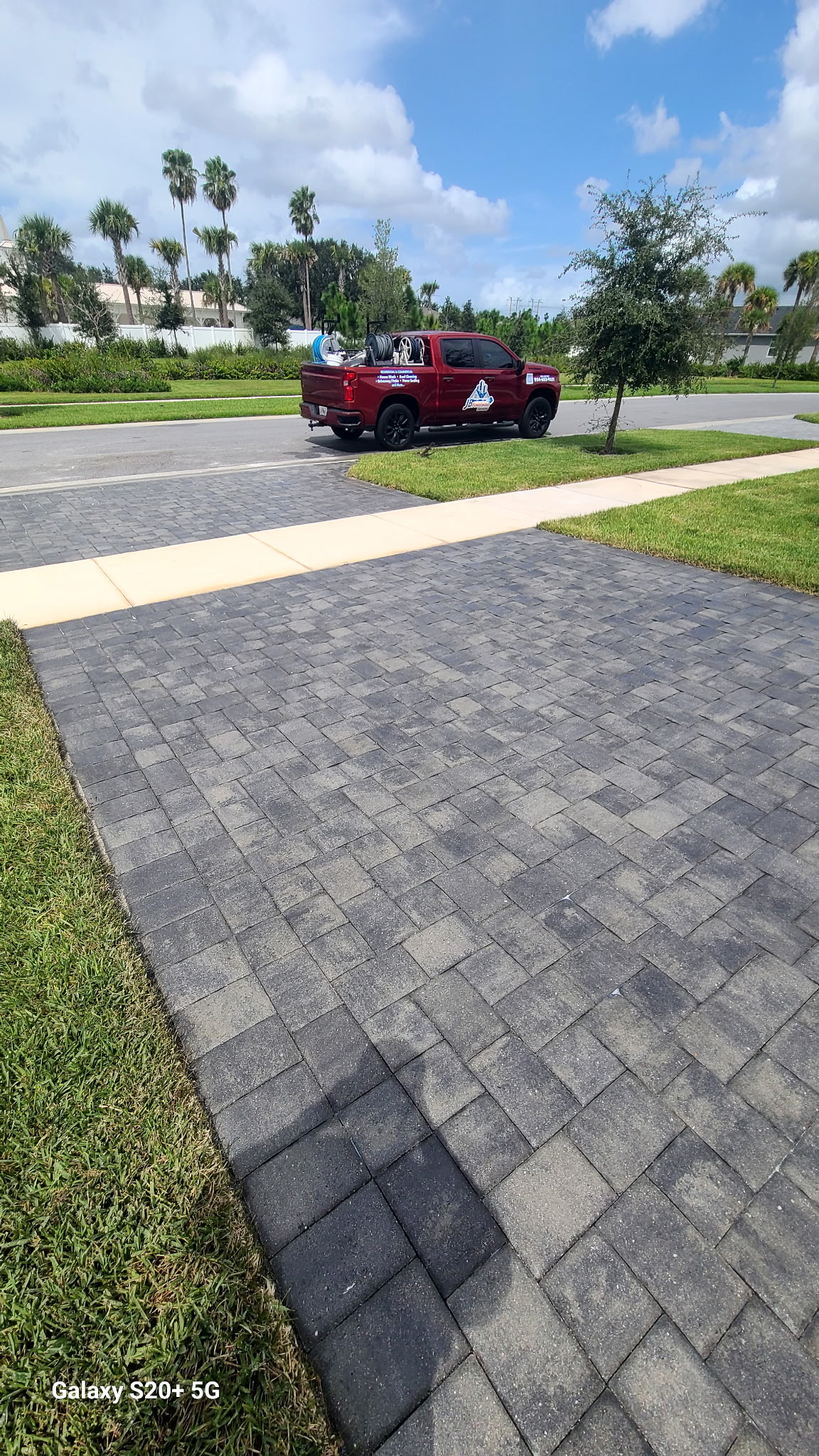
Yes, Florida's dry season is a good time to seal pavers, because sealer goes on best when the pavers are clean and dry. Fewer rainy days make it easier to schedule cleaning and sealing close together. The crew still decides when the surface is ready, not the calendar.
JB Powerwash Services cleans pavers first and applies sealer once the pavers are clean and dry. We serve Port St. Lucie and St. Lucie County. If you want the full service explained, see our paver sealing page.
Why does it matter that pavers are dry?
Sealer needs a dry surface so it can soak in or bond properly. Pavers that are damp can trap moisture under the sealer, which may leave a cloudy look or a weak finish.
Pavers are porous. They hold water in the joints and below the surface long after the top looks dry. A paver that feels dry on the surface may still be wet inside, especially in shaded spots or low areas of a driveway.
That is why the order of the job matters. Pavers are cleaned first so dirt, algae and old stains are gone. The surface and joints then need time to dry before the sealer goes on. Skipping that wait is one of the quickest ways to get a poor result.
Does the dry season make sealing easier to schedule?
Yes, usually. The dry season runs from about November to April, and long stretches without rain give a crew more open days to clean, dry and seal.
In the wet season, afternoon storms can interrupt a job and push it back a day or more. In winter, mornings are often cooler and drier, and the days are often steadier. That makes it easier to plan.
Dry season does not mean every day works. A cold front can bring rain, wind and heavy dew. Cool, damp mornings can leave pavers wet longer than you expect. The crew checks the surface before sealing, and that check matters more than the month.
Winter is also a good time for another reason. Many homeowners in Port St. Lucie, Tradition and St. Lucie West have guests, parties and holiday plans, and a clean sealed driveway looks good for them. Booking early helps you get a day that suits your own plans.
How does the job go, step by step?
The work follows a set order, and each step depends on the one before it.
- Walk the area with the crew and point out stains, weak spots and any areas you care about most.
- The crew cleans the pavers to remove dirt, algae and other build-up.
- The pavers and joints are allowed to dry.
- The crew checks that the surface is ready.
- Sealer is applied once the pavers are clean and dry.
- You are told how long to keep off the area and when you can use it again.
The last step is the one to ask about. Cure times depend on the weather and the product, so ask the crew for the plan for your own driveway, patio or pool deck. We do not promise a set time ahead of the job.
What if it rains between cleaning and sealing?
If it rains after cleaning, the pavers need to dry again before sealer goes on. The crew will check and may move the sealing to another day.
This is normal and it is not a problem with the job. Rain on cleaned pavers can leave them damp for a while, and sealing over damp pavers can cause trouble. Waiting is the safer choice.
Rain can also bring new dirt, leaves and pollen onto the surface. If the pavers get dirty again, the crew may rinse them before sealing. Ask how your crew handles a delay, so you know what to expect before the day arrives.
If your pool deck is part of the job, our post on pool deck sealing timing after cleaning covers the same wait between cleaning and sealing.
What should you ask about timing?
Ask when the pavers will be cleaned, how long they will dry before sealing, and what happens if the weather changes. Clear answers mean the crew has a plan.
Here are good questions to ask any company:
- How do you tell the pavers are dry enough to seal?
- What happens if rain comes after cleaning?
- How long should we stay off the pavers after sealing?
- When can the car go back on the driveway?
- Do you clean and seal on the same visit, or on separate days?
Also ask what the finish will look like. Some sealers leave a natural look and others give a richer color, so choose the look you want before the work starts. Our Tradition pressure washing page shows other work we do for homes nearby.
Can you wait for spring?
You can, but it is not always the better choice. Spring is still dry for part of the season, yet the warm, wet weather of summer follows soon after, and the schedule fills up.
If your pavers are stained, green or worn right now, dirt and algae will keep building the longer they wait. Cleaning and sealing in dry season gives the surface a protective layer before summer rain returns.
If you are not sure, ask for a look at the area. We can tell you whether the pavers need cleaning only, sealing too, or can wait a bit longer.
Who do you call in Port St. Lucie?
Call JB Powerwash Services if you are in Port St. Lucie, Tradition, St. Lucie West, Fort Pierce, Stuart, Palm City or Jensen Beach. We will look at your pavers and talk through the timing with you.
Want to get on the schedule while the weather is dry? Call JB Powerwash at 954-652-9551 for a free estimate on cleaning and sealing your pavers.
Frequently Asked Questions
How long do pavers need to dry before sealing?
It depends on the weather, shade and how wet the joints are. The crew checks the pavers and joints before sealing. A set number of hours would not be reliable, so ask for the plan on your job.
Can pavers be sealed in the wet season?
They can, if there is a dry window long enough for the pavers to dry. It is harder to schedule in summer, since afternoon storms often interrupt the work and delay sealing.
Do I need to clean pavers before sealing them?
Yes. Sealing over dirt, algae or stains locks them in. Pavers are cleaned first, then allowed to dry, then sealed once the surface and joints are ready.
What if the sealer gets rained on after it goes down?
Ask the crew how they handle this before the job. The plan depends on the weather and the product, so they will tell you how long to wait and what to watch for.