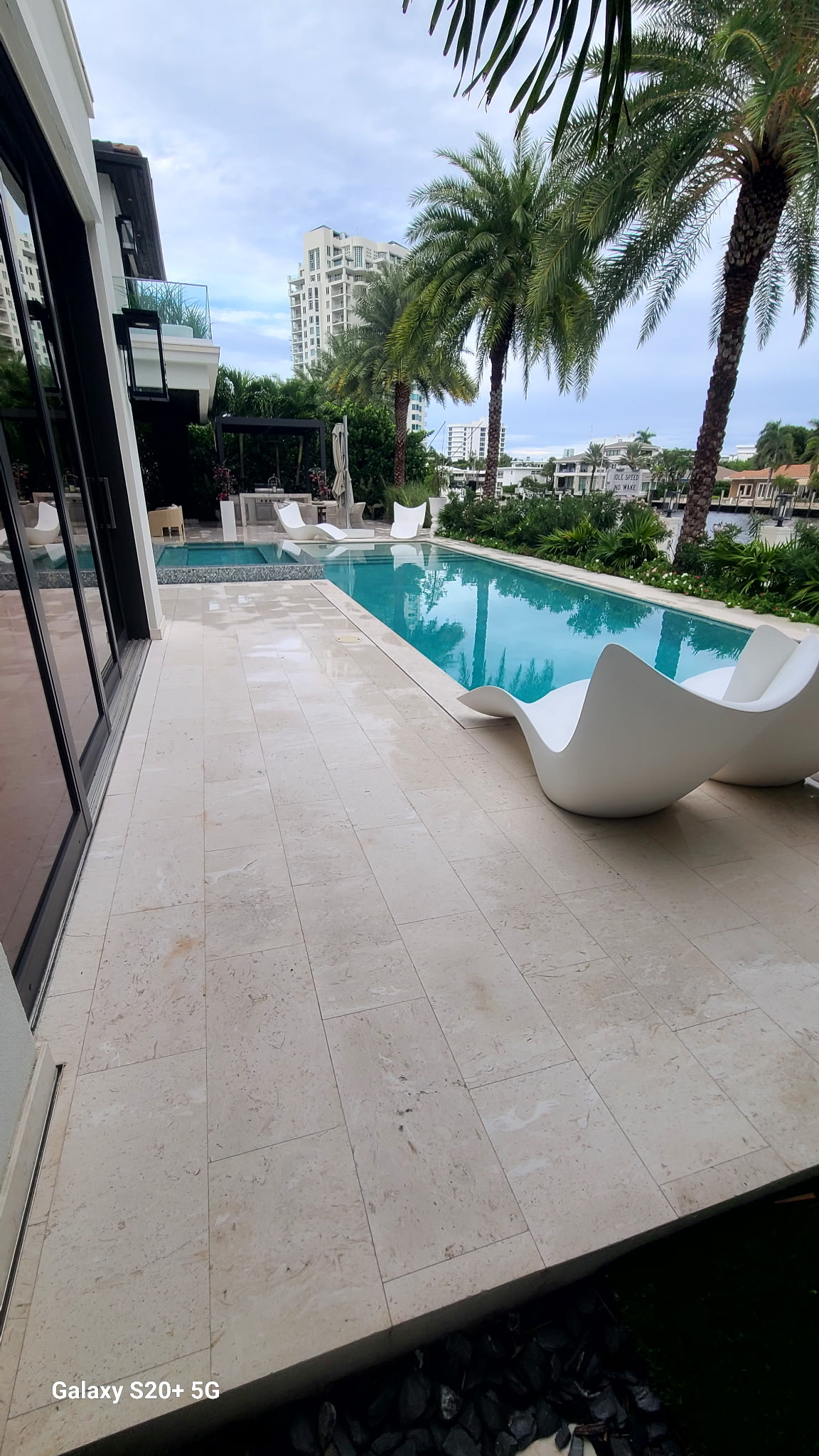
Seal a pool deck only after it is fully clean and fully dry. Cleaning comes first, then the surface needs time to dry before sealer goes on. Rushing either step can trap dirt under the sealer or cause a cloudy, uneven finish. Your crew can tell you the right window based on the weather and the product they use.
Why Cleaning Must Come First
Sealer locks in whatever is on the surface. If dirt, algae, or residue is still there, the sealer seals it in. That can leave dark spots, streaks, or a film that is hard to remove later. A clean pool deck gives the sealer a clean base to bond to.
Pool decks collect a lot of residue. Sunscreen, body oils, pollen, and fertilizer runoff all build up over time. Green algae can grow in shaded corners and between joints. Each of these needs to be addressed during cleaning, not after sealing.
How Long a Pool Deck Needs to Dry
Drying time depends on several things. Pavers and stone can hold moisture for a while after a wash, especially in the joints. Humidity, shade, and rain all change how fast the deck dries. In Port St. Lucie, the warm and humid climate can slow the process, even on a sunny day.
Do not guess. Press a hand or a dry towel on several spots across the deck. If the surface feels damp or the stone looks darker in some areas, it is not ready. Wait until the whole deck looks evenly dry. Then follow the drying guidance on the sealer label and the advice from your crew.
Check the Weather Before You Seal
Weather plays a big role in timing. Rain shortly after sealing can cause problems. Water can wash over a fresh coat or leave marks. Heavy heat can dry the sealer too fast, which may cause uneven results. A mild, dry stretch of days works best for sealing.
Plan the work so the sealer has time to cure before the pool gets heavy use. Keep people and pets off the deck until the surface is ready. Ask your crew how long the deck should rest before furniture, pool chairs, and towels return to the area.
Choosing a Sealer in General Terms
Sealers come in different types. Some are water-based. Others are solvent-based. Each type has its own look, feel, and drying behavior. Some sealers add more shine, while others keep a natural finish. Some are better suited for certain stones or pavers than others.
Ask your crew which sealer fits your deck and why. Good questions include how the product handles moisture, how it looks when wet, and how it changes slip resistance. You can also read our guide on choosing between water-based and solvent paver sealers for more background.
Slip Resistance Around the Pool
Safety matters on a wet pool deck. Some sealers can make a surface feel slicker when wet. Others keep more natural grip. Test a small area first if you have concerns. Ask the crew to show you how the finished surface feels when damp, not only when dry.
Textured stone can also help. A deck with a light texture usually feels safer than a very smooth finish. Talk with your crew about how your family uses the pool area before choosing the final look.
Joint Sand and Edges
Joints between pavers need attention. Loose sand can wash out during cleaning if the pressure is too high. Check the joints after the deck dries. Refill with the right joint material if needed. Then let the joints settle before sealing.
Edges and corners often need extra care. Pool edges, steps, and planters can hold dirt and moisture. Make sure these areas are clean and dry before the sealer goes on. Full coverage gives the finish a uniform look.
Questions to Ask Your Crew
A clear plan helps you avoid surprises. Before the work begins, ask a few simple questions. What cleaning method will you use? How will you protect the plants and the pool area? How long should the deck dry before sealing? What sealer do you recommend, and why? How long should I keep people off the surface after sealing?
Write down the answers. A written plan makes it easier to follow the timing and keep the deck in good shape over time.
Keeping the Deck Looking Good
After sealing, routine care helps the finish last. Rinse off sunscreen and debris when you can. Sweep loose leaves and sand. Avoid harsh cleaners that can strip the sealer. Schedule a check-in with your crew when the deck starts to look dull or dirty again.
Serving Port St. Lucie and St. Lucie County
JB Powerwash Services serves Port St. Lucie and St. Lucie County. We work with homes in Tradition, St. Lucie West, Fort Pierce, Stuart, Palm City, and Jensen Beach as well. Pool decks, pavers, and lanai areas all benefit from careful cleaning and the right timing. If you want to learn more about our paver cleaning and sealing services, start there.
Request a Free Estimate Today
Sealing a pool deck at the right time protects the work you already paid for and keeps the surface looking its best. If your deck needs cleaning before sealing, JB Powerwash Services can help you plan the steps. We offer free estimates. Call 954-652-9551 to request a free estimate for your pool deck.
Frequently Asked Questions
Should I clean a pool deck before sealing it?
Yes. Sealer locks in whatever is on the surface. Clean the deck first, then let it dry fully before sealing.
How do I know if a pool deck is dry enough to seal?
Check several spots across the deck. The surface should feel dry and look evenly colored. Follow the drying guidance on the sealer label and your crew's advice.
Does sealing a pool deck make it slippery?
It depends on the sealer and the finish. Some sealers change how wet surfaces feel. Ask your crew about slip resistance and test a small area first if you are concerned.
Do you offer free estimates for pool deck work?
Yes. JB Powerwash Services offers free estimates. Call 954-652-9551 to request one.