Hard-water stains come from sprinkler overspray, algae shows up as a slick green or dark film in damp shade, and tire marks sit in the porous concrete. Each one looks different, which tells you what it needs. JB Powerwash uses pressure washing to clean all three on driveways in Port St. Lucie.
Use this short guide to read your own driveway before you call. You can do each step in a few minutes with nothing but your eyes and a dry hand.
- Walk the driveway in daylight and note which areas look dark, orange or smeared.
- Check where each stain sits: near sprinklers, under trees, or where cars park.
- Touch the surface in damp shade to feel for a slick film.
- Look at the stain's shape, since streaks, spray patterns and round spots mean different things.
- Take a few photos so you can describe each stain when you request an estimate.
How do you tell hard-water staining from algae?
Look at the location and the shape. Hard-water stains follow the path of the spray, while algae spreads where it stays damp and shaded. Texture helps too, since algae feels slick and mineral stains feel dry.
Hard-water staining often shows up as orange, brown or rust-colored streaks and fans. Sprinklers that reach the driveway leave those marks again and again. Each watering adds a little more mineral, which builds up on the concrete.
Algae looks like a green, gray or black film. It grows in shaded, damp spots, such as the edge beside a lawn, under a tree or on the side of the house that stays wet. It can be slippery when wet, so it is worth cleaning for safety as well as looks.
JB Powerwash says pressure washing removes hard-water stains, algae, and tire marks, adjusting pressure and technique to the surface. A mineral stain and an algae film are not the same job, which is why the technique changes.
What do tire marks and oil drips do to concrete?
Concrete is porous, so tire rubber and oil soak into the surface instead of just sitting on top. That is why they leave marks that do not brush away. Tire marks tend to appear as dark lines or patches where cars turn or park.
Oil drips usually show up as dark round spots in the same place each time. They can spread outward as they soak into the concrete. Our post on oil stain removal on driveways goes deeper on that one.
A fresh mark is easier to lift than an old one. If you notice a spill, blot it up and keep the area from getting wet again. Do not scrub it with a stiff wire brush, since that can scar the surface.
Why does a garden hose not touch any of them?
A garden hose does not have enough force to clear any of the three. It rinses the surface, but it cannot lift mineral deposits, break up an algae film or draw rubber out of the pores of the concrete.
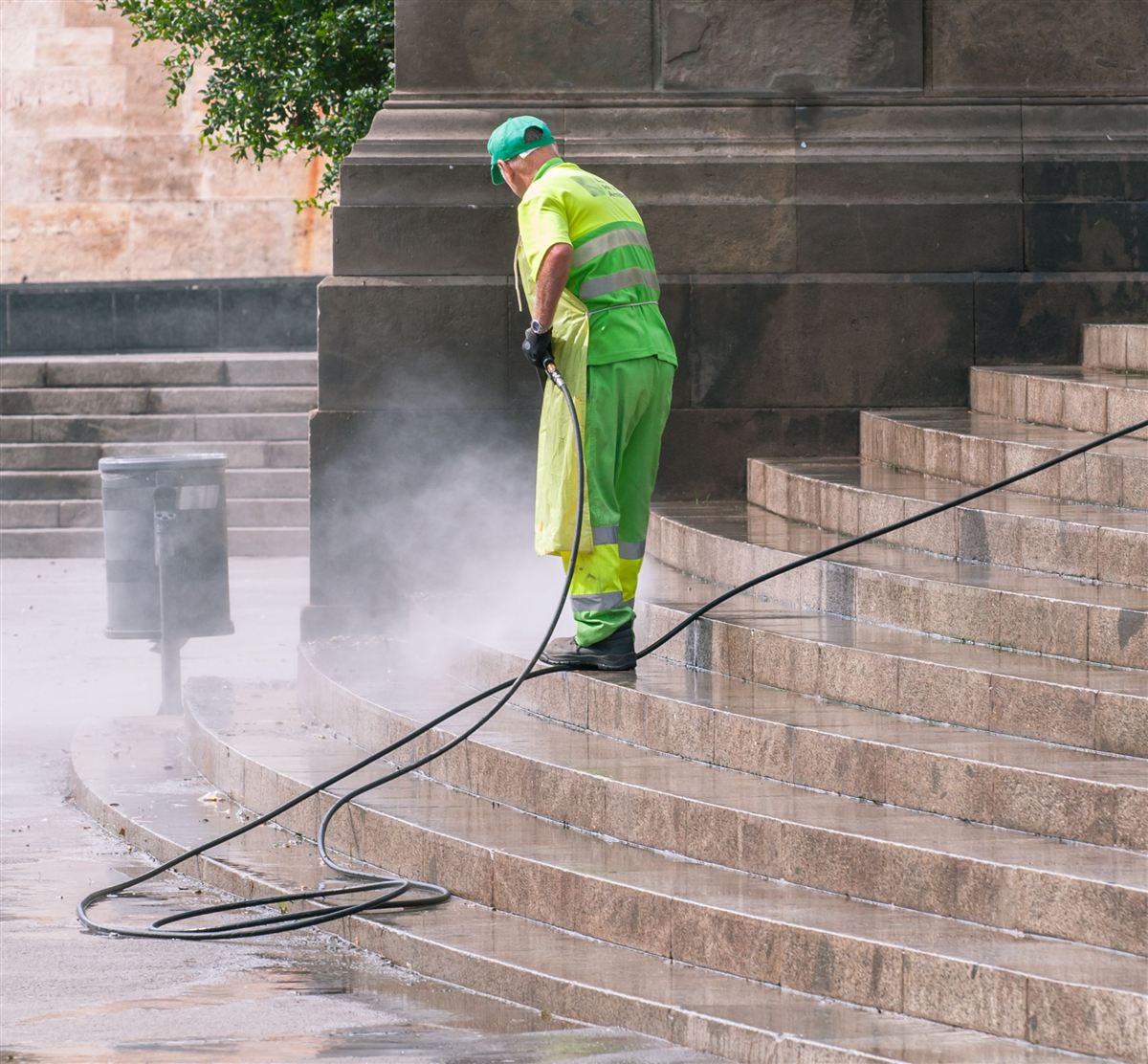
Pressure washing uses more force and a controlled technique. The crew adjusts the pressure and the method to the surface, so the clean comes from the right tool and not from brute force. Too much pressure in the wrong spot can etch concrete and leave lines in it.
That is why a driveway that has been hosed down still looks stained. The surface is wet and darker for a while, then returns to the same look once it dries.
What changes when stains have set for seasons?
Stains that have set for several seasons are harder to remove and may only lighten. The longer a stain sits, the deeper it works into the concrete, and the more layers of buildup there are on top of it.
Algae returns faster in shade and damp, which is common in Florida. Hard-water staining returns when the sprinklers keep hitting the same spot. If you clean the driveway but do not change the cause, the stains come back.
Here are a few easy ways to slow them down:
- Aim sprinkler heads away from the driveway.
- Trim back branches so the surface can dry in the sun.
- Fix leaks from vehicles and wipe up spills quickly.
The point is not to scare you. It is to explain why the first wash may look better than the next one, and why a stain that has been there a long time may need extra care.
What should you tell the crew about each stain?
Tell the crew where the stain is, what it looks like and how long it has been there. Those three details help JB Powerwash plan the right method before arriving.
Share the photos from your walk. Mention the sprinklers, the shade, and any oil or tire marks you know about. Also say whether you have pavers, steps or other surfaces beside the concrete, since each may need a different approach. JB Powerwash uses soft washing for roofs and delicate surfaces, so the crew already thinks about matching the method to the material.
JB Powerwash Services serves Port St. Lucie and St. Lucie County, and it offers free estimates. To get your driveway looked at, call 954-652-9551 and describe what you found on your walk.
Frequently Asked Questions
Why does my driveway have orange streaks?
Orange or rust-colored streaks are often hard-water stains from sprinkler overspray. The minerals in the water dry on the concrete and build up each time the sprinklers run. Aiming the heads away helps stop them returning.
Is algae on a driveway dangerous?
It can be slippery when wet, especially in damp shade. If you notice a slick green or black film on the driveway or steps, clean it before it becomes a safety problem.
Can I clean driveway stains with a garden hose?
A hose rinses the surface but does not lift mineral buildup, algae or tire marks out of the concrete. Pressure washing with the right technique does a much better job.
Does JB Powerwash offer free estimates?
Yes. JB Powerwash Services offers free estimates and serves Port St. Lucie and St. Lucie County. Call 954-652-9551 and have a few photos of your driveway ready to describe the stains.