Most fresh oil stains on a concrete driveway can be lightened with a good degreaser and a thorough rinse. Older stains are harder, and they may leave a faint shadow even after cleaning. The sooner you act, the better your results will be.
Fresh oil vs. old oil stains
Fresh drips look dark and wet. They are easier to lift because the oil has not soaked deep into the concrete yet. Old stains have had time to sink in. They look flat and dull, and they often resist simple scrubbing. Knowing which type you have helps you choose the right approach.
Gather the right supplies
You do not need a lot of equipment, but the right tools make a difference. Here is a simple list to start with:
- A concrete degreaser made for driveways.
- A stiff push broom or deck brush.
- Absorbent granules, such as cat litter, for fresh spills.
- Gloves and eye protection.
- A bucket, a garden hose, and a pressure washer with a surface cleaner attachment.
Step one: soak up fresh oil
If the spill is still wet, cover it with absorbent granules right away. Let the granules sit until they have soaked up the oil. Then sweep them into a bag and put it in the trash. Do not hose oil toward storm drains, because it can end up in local waterways.
Step two: apply a degreaser
Wet the stained area first. This helps the degreaser spread and keeps the surface from absorbing it too fast. Apply the degreaser evenly, and follow the label instructions for timing. Let it sit for the recommended time, then scrub with a stiff broom. Work in one direction to avoid spreading the stain.
Do not let the degreaser dry on the surface. If the area starts to dry, mist it lightly with water and keep working.
Step three: rinse with hot water or pressure
Hot water helps loosen oil that has started to break down. A pressure washer can also lift stains from concrete, but the technique matters. Keep the nozzle moving and hold the wand at a safe distance. Too much pressure in one spot can etch the surface. A surface cleaner attachment gives you more even results across the driveway.
Step four: check and repeat
Look at the stain once the concrete has dried. Oil can wick back to the surface in hot Florida weather, so a stain that looks gone may return a little. If a dark spot remains, repeat the degreaser step. Give stubborn spots a second pass rather than pushing harder with the pressure washer.
Stains that may not come out fully
Some stains will not come out completely. This is most common with old, deep, or repeated spills. Concrete is porous, so oil that has soaked deep can leave a faint shadow. Setting honest expectations helps you plan. It also helps to take a photo of the stain before you start, so you can compare the results later and see how much progress you made. A professional can test the approach on a small hidden area first, so you can see the likely result before the full driveway is treated.
Concrete vs. pavers
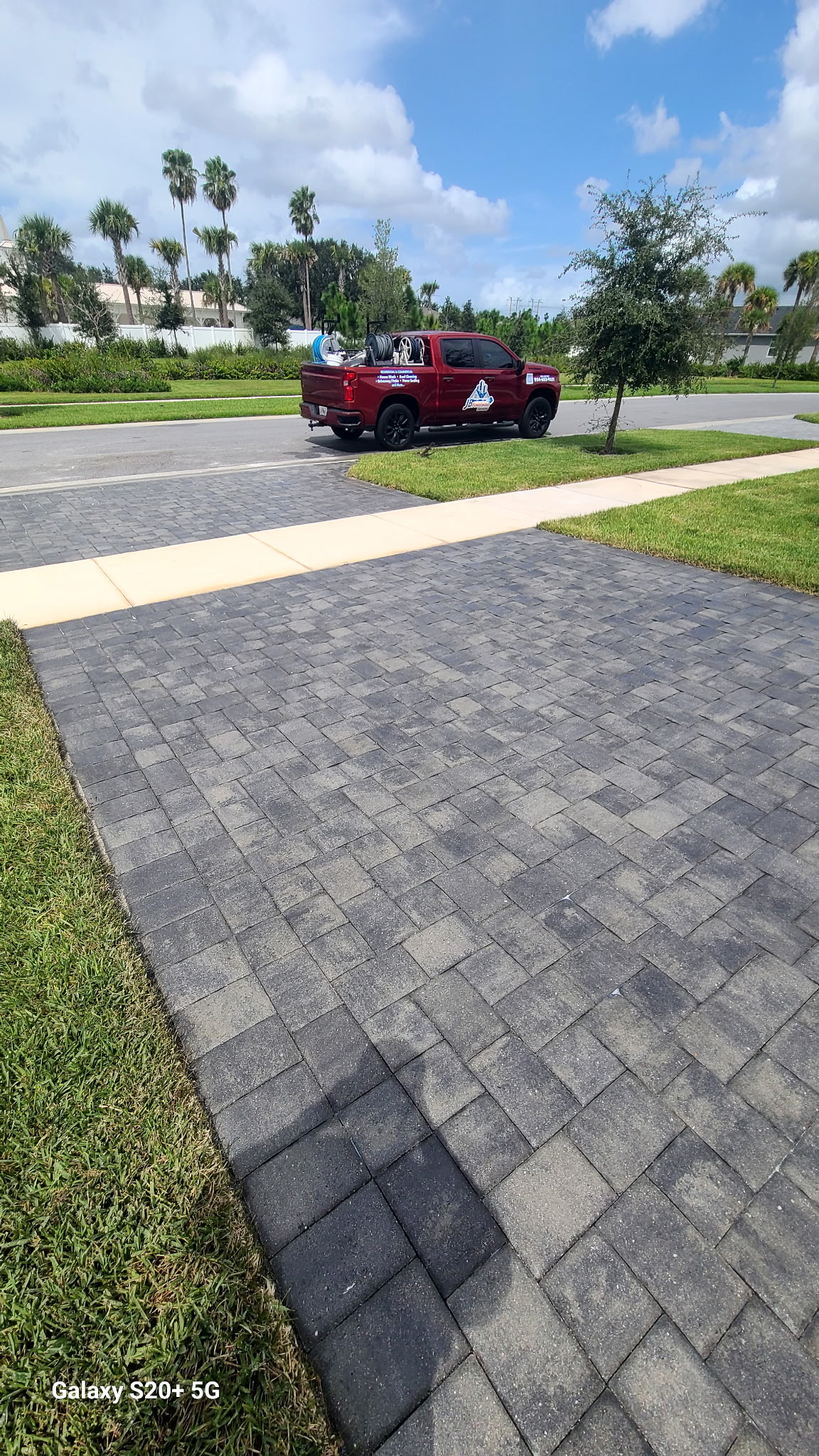
Concrete and pavers react differently. A concrete driveway is one solid surface, so a single stain stands out clearly. Paver driveways have joints filled with sand, and oil can soak into both the pavers and the sand. Pressure washing can also wash sand out of the joints. If your driveway uses pavers, ask about sand replacement and sealing before you clean. Whichever surface you have, test a small area first.
Protect the driveway going forward
Prevention saves work later. If a car tends to leak, place a drip pan or a piece of cardboard under the spot where it parks. Repair leaks when you notice them. Sweep debris off the driveway on a regular basis. Clean fresh spills quickly, because the sooner you act, the easier the job is. Keep a bag of absorbent granules near the garage or carport so you can respond right away.
When to call a professional
Call a pro if the stain is large, old, or spread across much of the driveway. A pro has the right equipment and the experience to treat concrete without causing damage. Ask how the crew will protect nearby plants, the lawn, and the pool area during the work.
For more on how driveway pressure washing works, read our guide to what affects driveway pressure washing.
About JB Powerwash Services
JB Powerwash Services serves Port St. Lucie and St. Lucie County, from Tradition and St. Lucie West to Fort Pierce, Stuart, Palm City, and Jensen Beach. We use soft washing for roofs and delicate surfaces. We also offer house washing, driveway and concrete pressure washing, paver cleaning and sealing, pool cage and lanai cleaning, and commercial pressure washing. Learn more about our pressure washing services.
Have an oil stain that will not go away? Call JB Powerwash Services at 954-652-9551 for a free estimate. We will look at your driveway, explain what is realistic, and help you choose the right approach.
Frequently Asked Questions
Can you remove oil stains from a concrete driveway?
Fresh stains often lighten with a degreaser and a good rinse. Old, deep stains may leave a faint shadow even after cleaning.
What should I do about a fresh oil spill?
Cover it with absorbent granules right away, let them soak up the oil, and sweep them into the trash. Do not hose oil toward storm drains.
Is pressure washing safe for oil stains on pavers?
It can be, but pressure can wash sand out of the joints. Ask about sand replacement and sealing before cleaning a paver driveway.
Do you offer free estimates for driveway cleaning?
Yes. JB Powerwash Services offers free estimates. Call 954-652-9551 to schedule a look at your driveway.