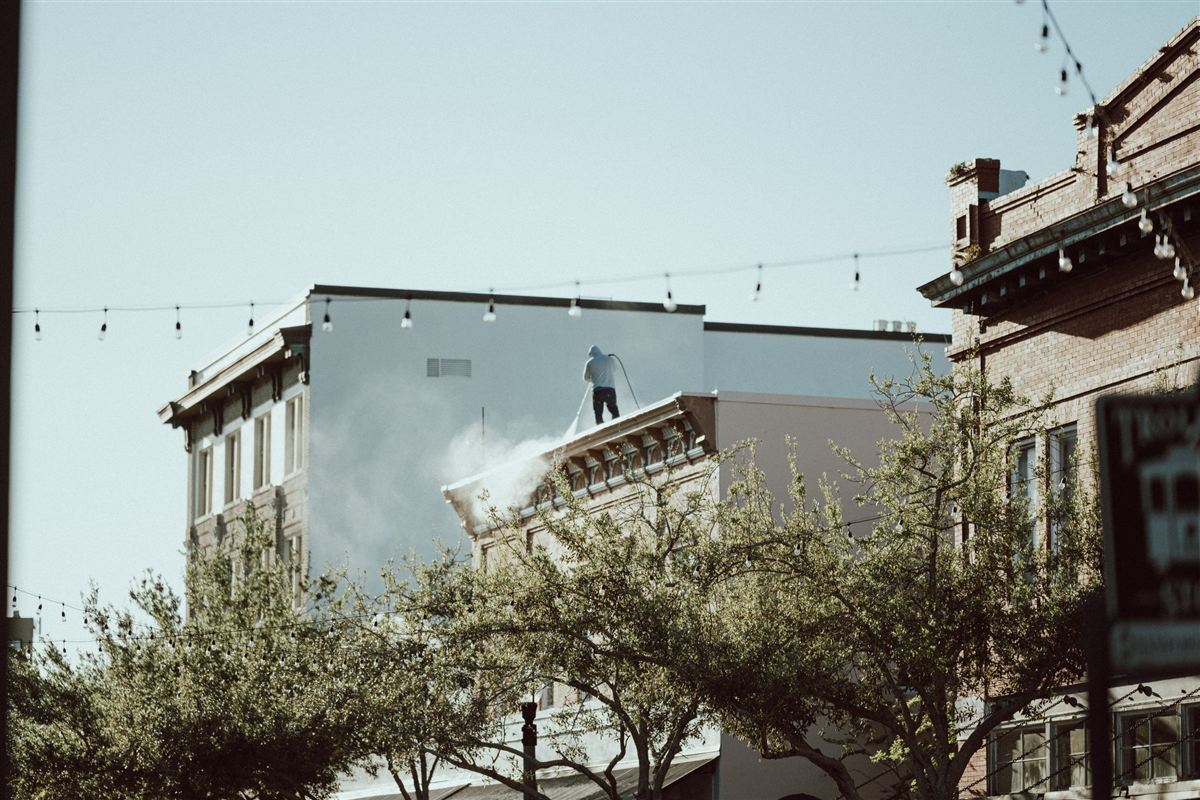
You can, but you generally should not use a pressure washer on a roof in Port St. Lucie. High pressure can strip the protective granules off asphalt shingles, crack tile and push water under the roof edge. The safer method is a soft wash: a cleaning solution applied at low pressure that kills the algae causing the black streaks, then a gentle rinse.
Why Is Pressure Washing a Roof Risky?
A driveway is flat, hard and meant to take force. A roof is neither. Asphalt shingles are coated with granules that shield them from sun and rain, and a strong stream can knock those granules loose. Tile can crack or shift under pressure, and shingles and tile both overlap so that water runs off, which means a jet aimed up the slope can drive water underneath. A wet roof is also slippery, so climbing up with a pressure washer is a safety risk for the person holding it.
What Are Those Black Streaks, and Why Does Force Not Fix Them?
On most Treasure Coast roofs the dark streaks are a blue-green algae that thrives in Florida’s heat and humidity. It is a living growth, not loose dirt. Blasting the surface can remove some of it, but whatever remains in the roof texture can grow back, and the force costs the roof material. A method that treats the growth itself does the job with less wear. Our guide to soft wash roof cleaning in Port St. Lucie explains the algae in more detail.
What Does a Soft Wash Do Differently?
A soft wash relies on chemistry rather than force. The cleaning solution goes on at low pressure, is given time to break down the algae, moss and lichen, and is then rinsed away gently. The pressure involved is closer to a garden hose than a pressure washer. That is why soft washing is the method used on shingle and tile roofs, and why pressure washing is reserved for hard surfaces such as concrete. See soft washing vs. pressure washing for how the two compare surface by surface.
Does Pressure Washing a Roof Void the Warranty?
It can. Roofing manufacturers publish their own care and cleaning instructions, and damage caused by high pressure is generally not something a warranty covers. Before anyone cleans your roof, check what your shingle or tile manufacturer says, and ask the cleaner which method they use. If the answer is a pressure washer on the roof surface, keep looking.
Can I Pressure Wash My Own Roof?
We would not recommend it. Beyond the damage risk to the roof, the work involves ladders, a sloped wet surface and chemical runoff near plants and pool water. A crew that cleans roofs regularly knows how to protect landscaping, control runoff and move across the roof safely.
Frequently Asked Questions
Can I pressure wash my own roof?
It is not recommended. A standard pressure washer can strip shingle granules, crack tile and force water under the roof edge, and a wet roof is slippery to stand on. Roof cleaning is better left to a crew that uses low pressure and the right equipment.
Does pressure washing a roof void the warranty?
It can. Some shingle and tile manufacturers limit how a roof may be cleaned, and damage from high pressure is usually not covered. Check your manufacturer’s cleaning instructions, and ask any cleaner which method they use.
Is soft washing the same as pressure washing a roof?
No. Pressure washing relies on force. Soft washing applies a cleaning solution at low pressure, lets it break down the algae, then rinses gently.
Will the black streaks come back after a roof cleaning?
Algae can return in Florida’s heat and humidity, mostly on shaded and north-facing slopes. How fast depends on shade, nearby trees and moisture.
Do you clean tile roofs as well as shingle roofs?
Soft washing is the method used on both shingle and tile. Call 954-652-9551 and describe your roof so Juan can confirm the right approach before the visit.
What We Recommend
If your roof has streaks, do not reach for a pressure washer. Look at the roof from the street, note which slopes are worst, and ask for a soft wash. Our roof cleaning service in Port St. Lucie uses low pressure on the roof surface, and our house washing page covers the walls and siding beneath it. Juan handles the job personally. Call for a free estimate and he will tell you what he sees on your roof before any work starts.