Pavers must be cleaned before sealing because sealer only works on a properly cleaned surface. Dirt, algae, mildew and old sealer all have to come out of the pavers and the joints first. Then the pavers need to dry. Sealer put over a dirty surface locks the problem in and tends to fail.
JB Powerwash Services starts every job this way. Our paver sealing service is a two-step process: a thorough cleaning first, then sealer once the pavers are clean and dry. Here is why that order matters for driveways, patios and pool decks in Port St. Lucie and across St. Lucie County.
What is sealer actually sitting on if the pavers are dirty?
It is sitting on the dirt. Sealer bonds to the paver, not to what is stuck on top of it, so a layer of grime sits between the two.
When the sealer cures, it forms a film or soaks in over whatever is there. If that is algae, dust or grease, the sealer holds onto it instead of the stone. The look may seem fine for a short time. Then the layer starts to cloud, peel or wear unevenly, because the bond underneath was never solid.
It also seals in the stains. A dark patch of mildew under a clear coat does not disappear. It stays visible and can get harder to remove later. Cleaning first gives the sealer a real surface to work with.
What gets lifted out of the surface and joints first?
The cleaning removes dirt, algae, mildew and any old sealer, from the paver faces and from the joints between them. The joints matter as much as the faces.
In Florida, pavers collect a lot. Humidity and rain feed green and black growth, and sun and traffic grind dust into the surface. Here is what a thorough cleaning goes after:
- Dirt and dust worked into the surface.
- Algae and mildew that darken the pavers.
- Old sealer that has worn, peeled or yellowed.
- Buildup in the joints where dirt and weeds collect.
- Oil and similar stains that sit on driveways.
Cleaning the joints is part of every paver job we do. Joints trap moisture and debris, so leaving them dirty invites growth to come back under the new sealer. If you want to see more on paver care in our area, read our post on paver sealing in Port St. Lucie.
Joints deserve a closer look. The sand between pavers holds the whole surface together and keeps weeds out. When dirt and organic matter pile up there, it holds moisture against the pavers and feeds new growth. Clearing the joints during the cleaning step gives the finished job a better chance of staying tidy.
Why do the pavers have to be dry before sealing?
Trapped moisture can cloud the sealer or keep it from bonding. After a wash, the pavers and joints need time to dry before sealer goes on.
Water sits inside the paver and in the sand joints. If sealer goes on over that moisture, the water can get locked in and show up as a hazy or milky look. It can also weaken how the sealer holds. That is why we wait until the surface is clean and dry.
Drying time depends on the weather. A sunny dry day moves quickly. A humid or rainy stretch takes longer. We will not rush the sealing step just to finish faster, because a rushed job is the one that shows problems later.
Ask a contractor about the order of work. A clear answer sounds like this: clean the faces and joints, let everything dry, then seal. If someone offers to seal right after a quick rinse, ask why. The cleaning step is where most of the lasting result comes from.
Can you skip the cleaning if the pavers look fine?
No. Pavers can look fine and still carry a film of dirt, algae spores and old residue that is hard to see until the sealer goes on.
A paver that looks clean from the doorway may be dull up close. Sealer is meant to protect and enhance the surface, so it should go over the stone itself. If the pavers are sealed already, the old coat may be worn, and sealing over it without proper cleaning can leave an uneven result.
There is another reason not to skip it. Cleaning shows what the pavers really look like. Once the dirt is gone, you can see the true color, spot loose joints and decide if anything needs attention before sealing. It is better to learn that first than to discover it under a fresh coat.
If a section has staining that will not lift, we tell you what we see before sealing. Sealing over a stain that remains simply makes it permanent, so it is better to know in advance. Honest talk about what cleaning can and cannot do is part of getting a result you are happy with.
What does the finished surface look like?
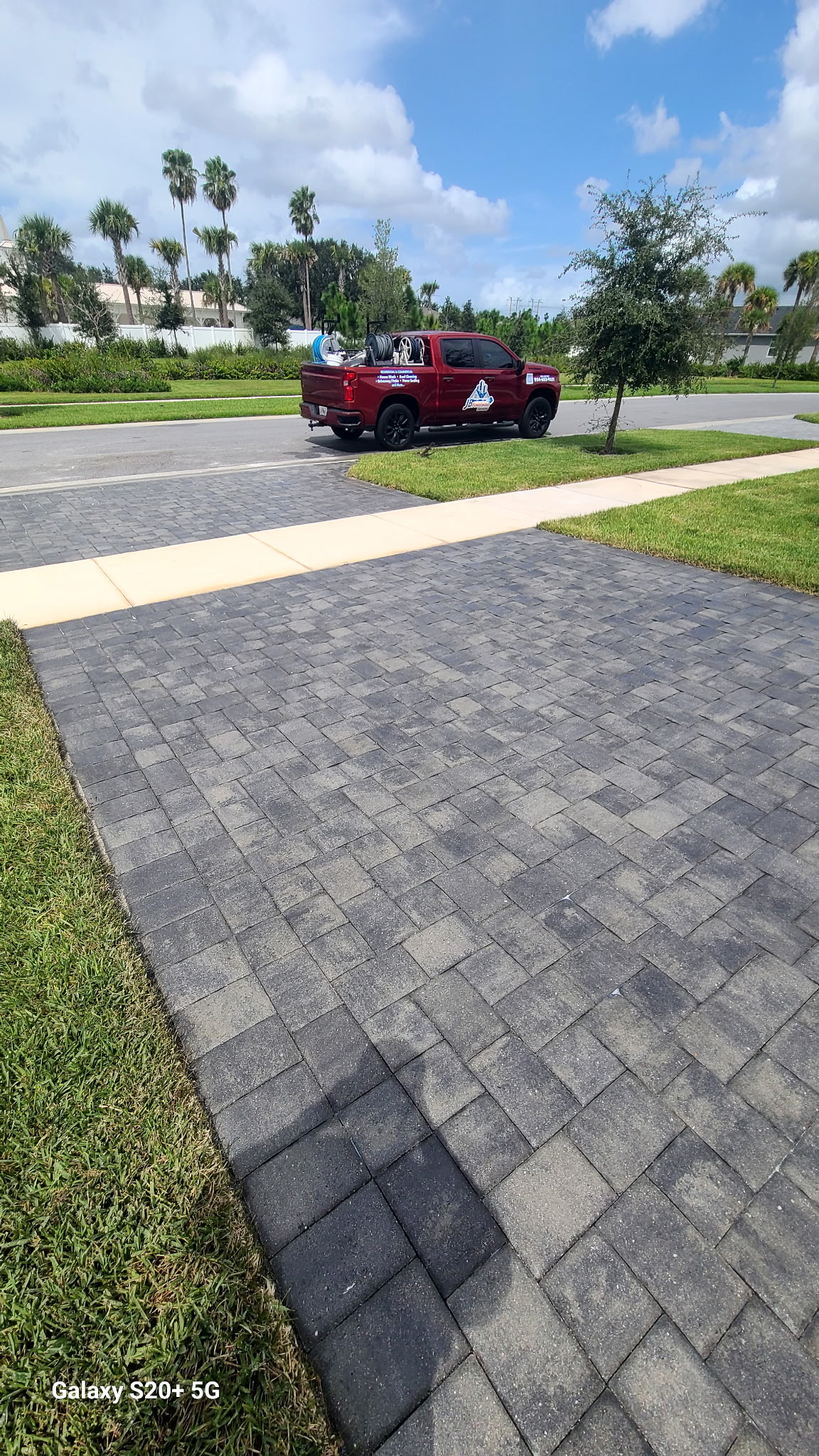
A properly cleaned and sealed paver surface looks even, with the color brought out and the joints tidy. It should also be easier to keep clean afterward.
When the order is right, you see the difference. The pavers look refreshed rather than blotchy, and the surface sheds dirt more easily. Because sealer bonds well to a clean surface, it wears more evenly instead of flaking in patches.
Maintenance gets simpler too. A sealed surface is easier to rinse, though it will still need care over time in Florida's sun and rain. If you also want your driveway or walkway cleaned, our pressure washing service covers concrete and other surfaces.
We serve Port St. Lucie, Tradition, St. Lucie West, Fort Pierce, Stuart, Palm City and Jensen Beach. Before you hire anyone to seal your pavers, ask how they clean and how they confirm the surface is dry. A good answer tells you a lot.
Planning to refresh your pavers? Call JB Powerwash Services at 954-652-9551 for a free estimate.
Frequently Asked Questions
Can I seal pavers myself after cleaning them?
You can, but the cleaning and drying steps decide the result. If you are unsure about either one, ask a professional. A poor job under sealer is hard to fix later.
Should old sealer be removed before resealing?
If the old sealer is peeling, cloudy or worn, it needs to come off during cleaning so the new coat bonds well. A technician can check the condition on site.
Will cleaning pavers damage the joints?
Cleaning should be done carefully so the surface and joints are not harmed. Ask your contractor how they protect the joints and whether they refill them where needed.
Why do my pavers turn green or black again?
Moisture, shade and humidity feed algae and mildew in Florida. Clean pavers and well-cleaned joints slow it down, but regular washing may still be needed over time.