Salt air leaves a dull film on outdoor surfaces, and that film speeds up the staining of porous pavers and concrete. Near the coast, dirt and algae grab hold faster. Cleaning the joints and sealing the surface matters more here. Our paver cleaning and sealing is built around that problem.
If you live in Jensen Beach, Stuart or Port St. Lucie, this guide explains what the film is and why it matters. You will also learn how to decide whether to clean and seal sooner.
What is the dull film on my patio?
The dull film is a thin layer of salt and grime left behind by the air near the water. It settles on the patio, the pool deck and the driveway, and it does not rinse off with a garden hose.
The Jensen Beach page on our site explains that salt air leaves a dull film on siding, glass and railings. The same thing happens on the ground. Pavers and concrete just show it differently. The surface looks flat, gray or blotchy instead of bright.
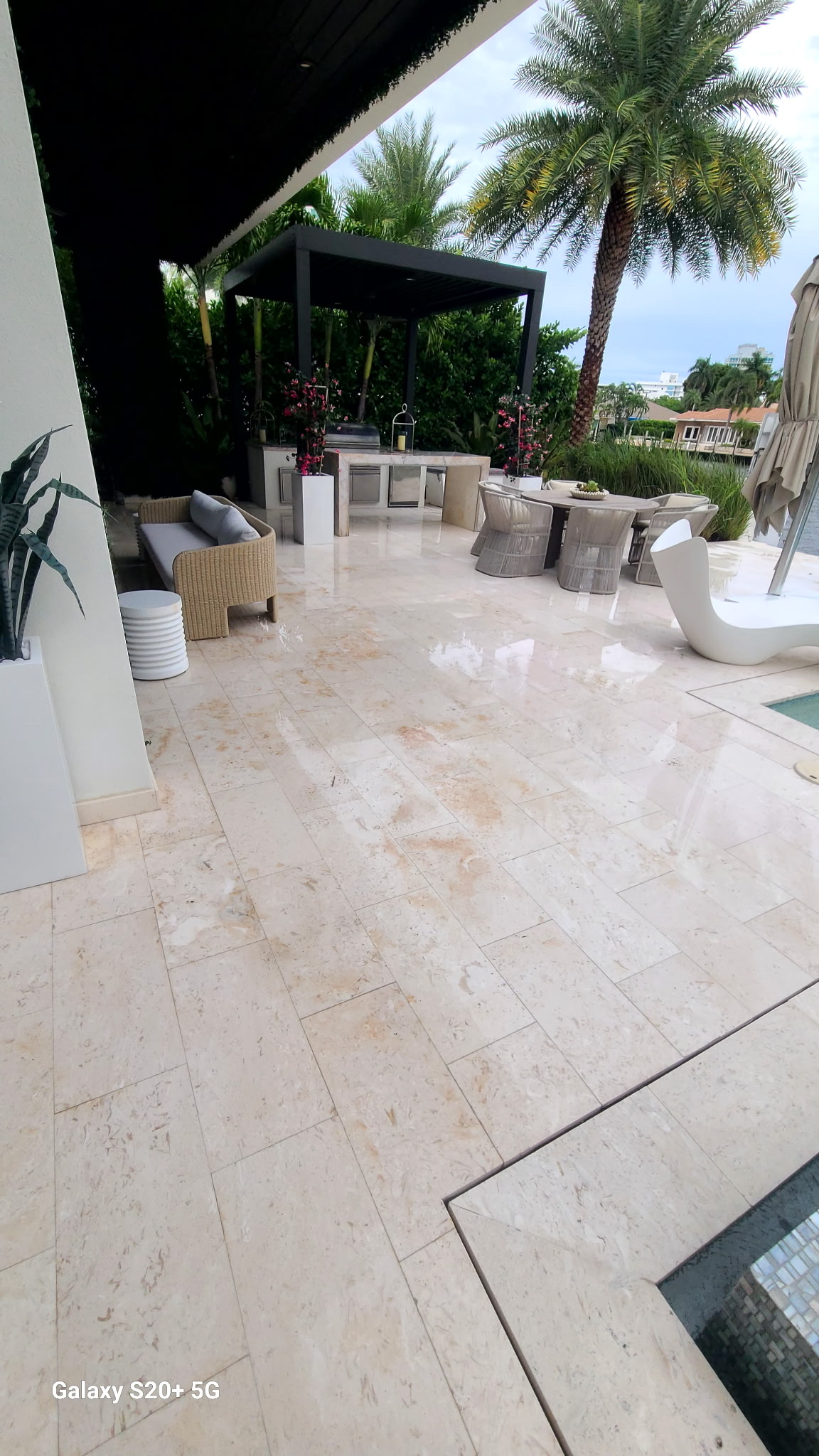
You may notice it first as a rough or chalky feel under your hand. Or the color of a travertine or paver patio may look faded, even though the stone is fine. That is usually film, not wear.
Why do porous surfaces stain faster near the coast?
Pavers and concrete are porous, which means they have tiny openings that soak up what lands on them. Salt air speeds up the staining of porous surfaces like these, because the film holds moisture and dirt against the stone.
Here is how it plays out on a typical patio:
- Salt and dust settle on the surface and stay damp longer.
- Damp film gives algae and mildew a place to grow.
- Rain, sprinklers and foot traffic push dirt and oil deeper into the pores.
- The stain sets, and it gets harder to lift each time.
Florida heat and humidity make this worse. A patio that stays shaded or wet will darken sooner than one in full sun. If water pools near a spot, you will often see the stain begin there.
Does cleaning and sealing change how quickly it returns?
Yes. A clean surface with a sealer on it holds less dirt, and stains are easier to wipe or wash away. Sealing does not stop the coast air, but it slows how fast the film sinks into the stone.
Cleaning comes first. A sealer put over dirt locks the dirt in. That is why the order matters, and why a quick rinse is not enough before sealing.
Do not expect a sealer to make a patio stain-proof or maintenance-free. It gives the surface a better chance, and regular washing keeps it that way. Ask your contractor how often they suggest cleaning for your location and how your pavers are used.
If your driveway or walkway is plain concrete, it benefits too. Read about our pressure washing if you want the concrete cleaned before the pavers.
Which outdoor surfaces get the film first?
Anything that sits outside and faces the wind gets the film first. Glass, railings and siding show it quickly. Pavers and concrete show it as staining that builds over time.
A short walk around your home will tell you where it is worst. Check these spots:
- Sliding glass doors and windows that look hazy after a rinse.
- Metal railings and gates with a dull or spotted finish.
- Pool decks and lanai floors with gray or green patches.
- Driveways and walkways with dark streaks in the low spots.
- Siding with a chalky look on the side that faces the water.
If several of these show up, it is a good sign the whole property would benefit from cleaning. Our Jensen Beach pressure washing page explains what we do for homes near the water.
Roofs and delicate surfaces need a gentler method. We use soft washing for roofs and delicate surfaces, so high pressure is saved for the surfaces that can take it.
What is the order of a paver visit?
A paver visit follows a set order: clean, rinse, let dry, then seal. The order protects the stone and helps the sealer bond to a clean surface.
Here is what to expect on the day:
- We look at the pavers and note stains, loose joints and low spots.
- We clean the surface and the joints to lift the film and dirt.
- We rinse and let the pavers dry fully.
- We apply the sealer evenly and let it cure.
- We walk the area with you and explain how to care for it.
Keep pets, kids and furniture off the area while the sealer cures. Your technician will tell you how long to wait before you use the patio again.
JB Powerwash Services serves Port St. Lucie and St. Lucie County. If you are not sure whether your patio needs cleaning or sealing, send us photos or ask for a look in person.
Call JB Powerwash Services at 954-652-9551 for a free estimate. Tell us where you live and what you see on your pavers, and we will help you decide the next step.
Frequently Asked Questions
How can I tell salt film from regular dirt?
Salt film looks dull and hazy and does not rinse off with a hose. Regular dirt usually washes away. If your glass, railings and pavers all look cloudy after a rinse, salt air is a likely cause.
Should I seal pavers right after cleaning them?
Yes, once the pavers are fully dry. Sealing over a dirty surface traps the dirt, so cleaning always comes first. Your technician will tell you how long to wait before the sealer goes on.
Will sealing keep my patio from staining?
Sealing makes stains easier to remove and slows how fast dirt sinks in, but it is not a permanent shield. Regular cleaning keeps the surface looking its best near the coast.
Does JB Powerwash use high pressure on every surface?
No. We use soft washing for roofs and delicate surfaces. Pressure washing is for sturdy surfaces like concrete, and we pick the method that fits what you have.