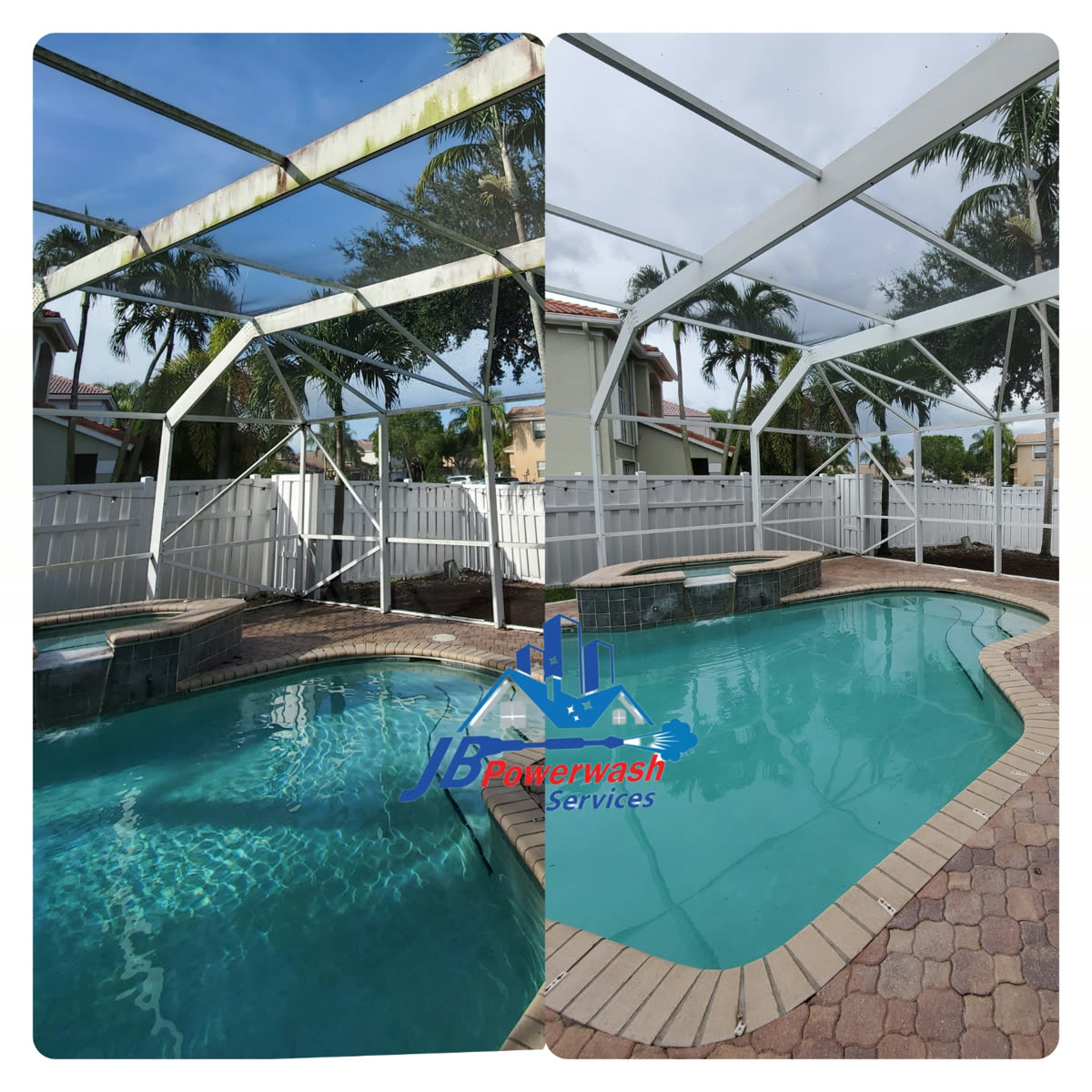
A pool screen enclosure can turn dark, gray or black in a few months. In Port St. Lucie, humidity, shade and rain give mildew and dirt the moisture they need to grow. The fix is a gentle cleaning that removes the growth without tearing the screen or damaging the aluminum frame.
Why Pool Screens Turn Black
Mildew is a fungus. It grows on surfaces that stay damp for long periods and have something to feed on, such as dust, pollen, bird droppings and dead leaves. Screens hold all of these. Pool cages also trap humidity, especially in shaded corners and on the north side of a home. Mildew spreads slowly at first, then it can cover large sections of the screen and frame. Dirt from nearby lawns and mulch adds to the problem.
Why Brushing Often Makes It Worse
Many people try to scrub screens with a stiff brush. This feels like the right move, but it often causes more damage. Aluminum screen is thin, and a hard brush can tear the mesh or push dirt deeper into the weave. Once a screen has a hole, insects and debris get inside, and the repair is more costly. Brushing can also scratch painted or powder-coated frames, which leaves them looking worn. Many people also end up with uneven results, with clean streaks next to dark patches, because a brush cannot reach every corner of the cage.
How Soft Washing Helps
Soft washing uses low pressure and a cleaning solution that is designed for delicate surfaces. Instead of blasting the screen, the solution loosens the mildew, dirt and grime so it can be rinsed away. This method is gentle on the mesh and the frame, and it reaches corners and edges that are hard to clean by hand. It is also a good option for the pool deck and the surfaces around the enclosure, where stains and algae often show up together.
What a Good Cleaning Includes
A thorough pool cage cleaning usually starts with a quick walk around the enclosure. The crew checks the screens for holes, loose spline, damaged corners and any sagging panels. Then they protect nearby plants, outdoor furniture and electrical fixtures. Next comes the cleaning solution, applied from the bottom up so it does not run dirty streaks over clean areas. Finally, the surfaces are rinsed thoroughly. A good crew will also clean the gutters or track areas where dirt tends to collect.
Why the Cleaning Method Matters
Gentle methods protect the enclosure over time. Harsh pressure can wear down the protective finish on aluminum, and rough brushing can loosen the screen where it meets the frame. Soft washing respects those materials. It also reduces the chance of leftover residue that attracts more dirt. If you want the screens to look clear for longer, the method you choose is just as important as the frequency.
How Often Should You Clean?
Florida homes usually need pool cage cleaning on a regular schedule, not just when the screens look bad. Homes with heavy tree cover, nearby irrigation or a lot of birds may need cleaning more often. Ask your cleaning company to recommend a schedule based on your yard and your exposure. Regular cleaning makes each visit easier and helps keep mildew from taking hold in the first place.
Tips Between Cleanings
You can help keep the screens cleaner between visits. Rinse away loose debris with a garden hose and a gentle spray, rather than a high-pressure nozzle. Trim branches that hang over the enclosure, since they drop leaves and sap. Adjust sprinklers so they do not soak the screens every morning. Keep an eye out for early spots, and call for help before they spread. Small steps can make a big difference in how often you need a deep cleaning. Pick a dry, calm day for any cleaning you do yourself, and keep pets and children away from wet areas until the surfaces have dried.
Protecting the Screen and Frame
Your enclosure is a big investment in comfort and privacy. Keeping it clean protects the screen from wear and helps the frame look its best. A dark, damaged screen can make the whole outdoor area look neglected, while a clean enclosure makes the pool feel open and inviting. If you notice tears or loose sections, have them repaired soon so that moisture and insects stay outside where they belong. Many homeowners also find that a cleaning before the start of the rainy season gives the screens a fresh start, so the summer storms do not have as much dirt to work with.
Plan a Cleaning With a Local Crew
JB Powerwash Services is based in Port St. Lucie and serves the Treasure Coast, including Port St. Lucie, Tradition, St. Lucie West, Fort Pierce, Stuart, Palm City and Jensen Beach. We offer pool cage and lanai cleaning using soft washing methods for delicate surfaces. We also clean roofs, driveways and pavers. Our estimates are free, and we can look at your enclosure in person before recommending a plan. Call Juan at 954-652-9551 for a free estimate. You can also read our guide on pool cage and lanai cleaning in Port St. Lucie to learn more.
Frequently Asked Questions
Why does my pool screen enclosure turn black?
Mildew and dirt grow on screens that stay damp in humid, shaded conditions. Dust, pollen and bird droppings give the growth something to feed on.
Can I scrub my pool screen with a stiff brush?
It is not recommended. Stiff brushes can tear the screen mesh and scratch the aluminum frame. Gentle soft washing is a safer option.
What is soft washing?
Soft washing uses low pressure and a cleaning solution made for delicate surfaces. It removes mildew and dirt without blasting the screen.
Does JB Powerwash offer free estimates for pool cage cleaning?
Yes. JB Powerwash offers free estimates for pool cage and lanai cleaning. Call 954-652-9551 to schedule a visit.