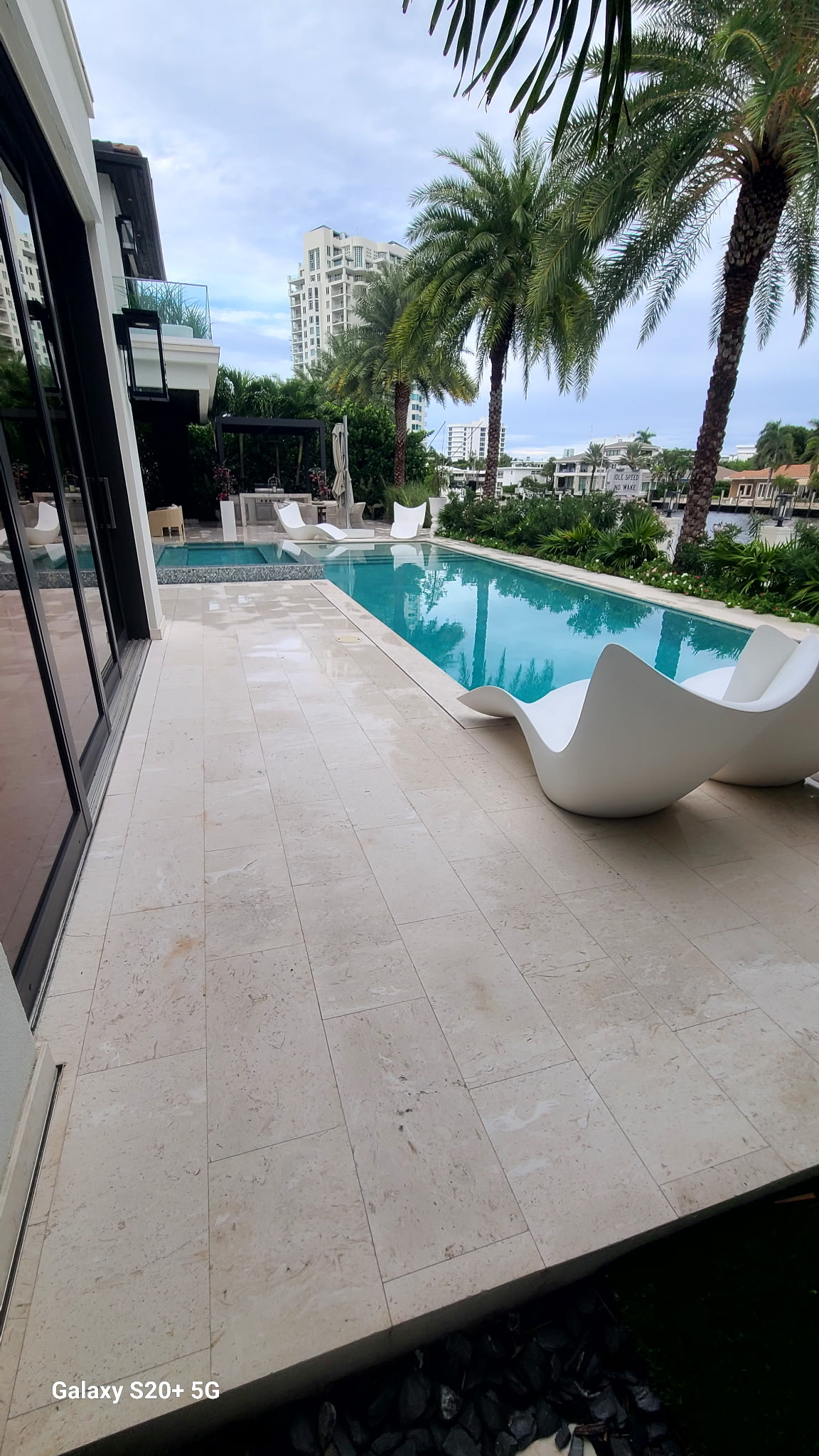
Green algae grows on pool deck pavers when water stays on the surface and sunlight stays low. Shady spots and areas near the pool edge are the most common trouble spots. You can remove it with a gentle wash, a soft brush, and a paver-safe cleaner, then reseal the surface to slow new growth.
Why Algae Grows on Pool Decks
Algae needs three things to grow: moisture, shade, and something to hold onto. Pool decks give it all three. Water from splashing, backwash, and rain sits in low spots and between pavers. Shade from a screen enclosure, a roofline, or tall trees keeps the surface damp for hours.
Port St. Lucie gets a lot of rain in the summer. Afternoon thunderstorms roll in most days from June through September. Then the sun comes back out and bakes the deck. That cycle of wet and hot is perfect for algae. Humidity stays high even on dry days, so the surface rarely fully dries.
The splash zone is the area within a few feet of the pool. Every time someone jumps in or climbs out, water hits the pavers. That splash keeps the edge wet. Algae often shows up first in these spots and spreads outward.
Why Algae Is a Slip Hazard
Green algae may look harmless, but it creates a slick layer. Wet feet and wet skin already make pool decks slippery. Add a film of algae, and the risk goes up fast. Kids run on these surfaces. Older adults walk on them every day. A small slip can lead to a serious fall.
Algae also hides other problems. Cracks, loose pavers, and sinking spots can be covered by green growth. When you clean the deck, you may find damage you did not know was there.
What You Need Before You Start
You do not need much to clean pool deck pavers. Gather these items first:
- A soft-bristle push broom or deck brush
- A garden hose with a spray nozzle
- A bucket for mixing your cleaner
- A paver-safe algae cleaner or a mild, diluted solution made for outdoor surfaces
- Old towels or rags for spills
- Protective gloves and eye protection
Read the label on any cleaner before you use it. Some products can harm nearby plants, pool equipment, or the sand between your pavers. Keep pets and kids off the deck while you work. Wet pavers are slippery, so move slowly.
How to Clean Algae Without Damaging Sand Joints
Many pool decks use polymeric sand between the pavers. That sand locks the stones in place. If you blast it with a high-pressure washer or scrub it hard, you can wash it out. Then weeds grow, pavers shift, and water gets under the surface. Take your time and use a gentle method.
- Sweep the deck first. Remove leaves, dirt, and loose debris.
- Wet the entire area with your hose. This helps the cleaner spread evenly and keeps it from drying on the surface.
- Apply your cleaner to a small section at a time. Let it sit for the time listed on the label. Do not let it dry.
- Scrub gently with a soft-bristle brush. Work in the direction of the joints, not across them.
- Rinse with a light flow of water. Keep the hose nozzle at a wide spray setting.
- Check the joints after rinsing. If sand looks loose, stop and let the area dry before you continue.
Avoid using a pressure washer on high settings near the joints. Even low settings can wash sand out if you hold the wand too close. If you do use a pressure washer, keep it on a wide tip and stay several feet from the surface.
Some stubborn algae needs a second pass. Repeat the steps on those spots only. Do not flood the whole deck with more cleaner. Too much product can leave residue or stain the pavers.
Reseal the Deck After Cleaning
Once the deck is clean and fully dry, think about resealing. A sealer creates a protective layer over the pavers. It makes the surface less likely to hold water and easier to clean later. A good sealer also helps lock in color and slow fading from the sun.
Wait until the pavers are completely dry before you seal. This can take a day or more after cleaning, depending on the weather. Check the sealer label for the right coat count and drying time. Most homeowners find that resealing every few years keeps their deck in good shape. For more detail on how this works, read our page on paver sealing.
Sealing also changes how the surface feels. Some sealers add a bit of grip, which can help with slips. Ask about slip-resistant options if your deck gets a lot of foot traffic.
Keep Algae From Coming Back
Cleaning solves the problem for a while. Prevention keeps it from returning. Try these habits:
- Sweep the deck every week or two to remove leaves and debris.
- Trim plants and branches that block sunlight, or that keep the deck damp.
- Fix low spots where water pools after rain.
- Rinse the splash zone after heavy use.
- Check for drainage problems near the pool and the screen enclosure.
- Clean the deck on a regular schedule, especially during the rainy season.
Algae is common across the area. Homeowners in Port St. Lucie, Tradition, St. Lucie West, Fort Pierce, Stuart, Palm City, and Jensen Beach all deal with it. The warm, wet climate in St. Lucie County makes it easy for algae to return. Regular care makes a big difference.
Pool cages and lanais often grow algae too. The same moisture and shade cause the problem. If you see green streaks on the screens or walls, our guide on pool cage and lanai cleaning in Port St. Lucie can help you plan the next step.
When to Call a Professional
Some jobs are easier to hand off. If your deck is large, very dirty, or hard to reach, a pro can help. If you are unsure whether your sand joints are damaged, a trained eye can spot problems early. Our team uses soft washing for roofs and delicate surfaces, and that same gentle approach works well for pool decks. It cleans the surface without forcing water into the joints.
Ready to get your pool deck clean and safe again? JB Powerwash Services offers free estimates for homes across Port St. Lucie and St. Lucie County. Call us at 954-652-9551 to schedule your free estimate today.
Frequently Asked Questions
Is green algae on pool deck pavers dangerous?
It is not toxic in most cases, but it can make the surface very slippery. Wet algae can cause falls, especially near the pool edge. Clean it up soon to reduce the risk.
Can I use bleach to remove algae from pavers?
Bleach can work, but it can also fade pavers, harm nearby plants, and weaken sand joints. Many homeowners prefer a cleaner made for outdoor surfaces. Always rinse well and follow the label directions.
Will pressure washing damage the sand between my pavers?
It can. High pressure can wash out polymeric or regular sand from the joints. Use a wide spray pattern, keep the wand farther away, and use a lower setting near the joints.
How often should I reseal my pool deck pavers?
Many homeowners reseal every few years, but the right timing depends on wear, sun exposure, and how often the deck gets wet. Check the sealer label and look for signs of fading or water soaking in.