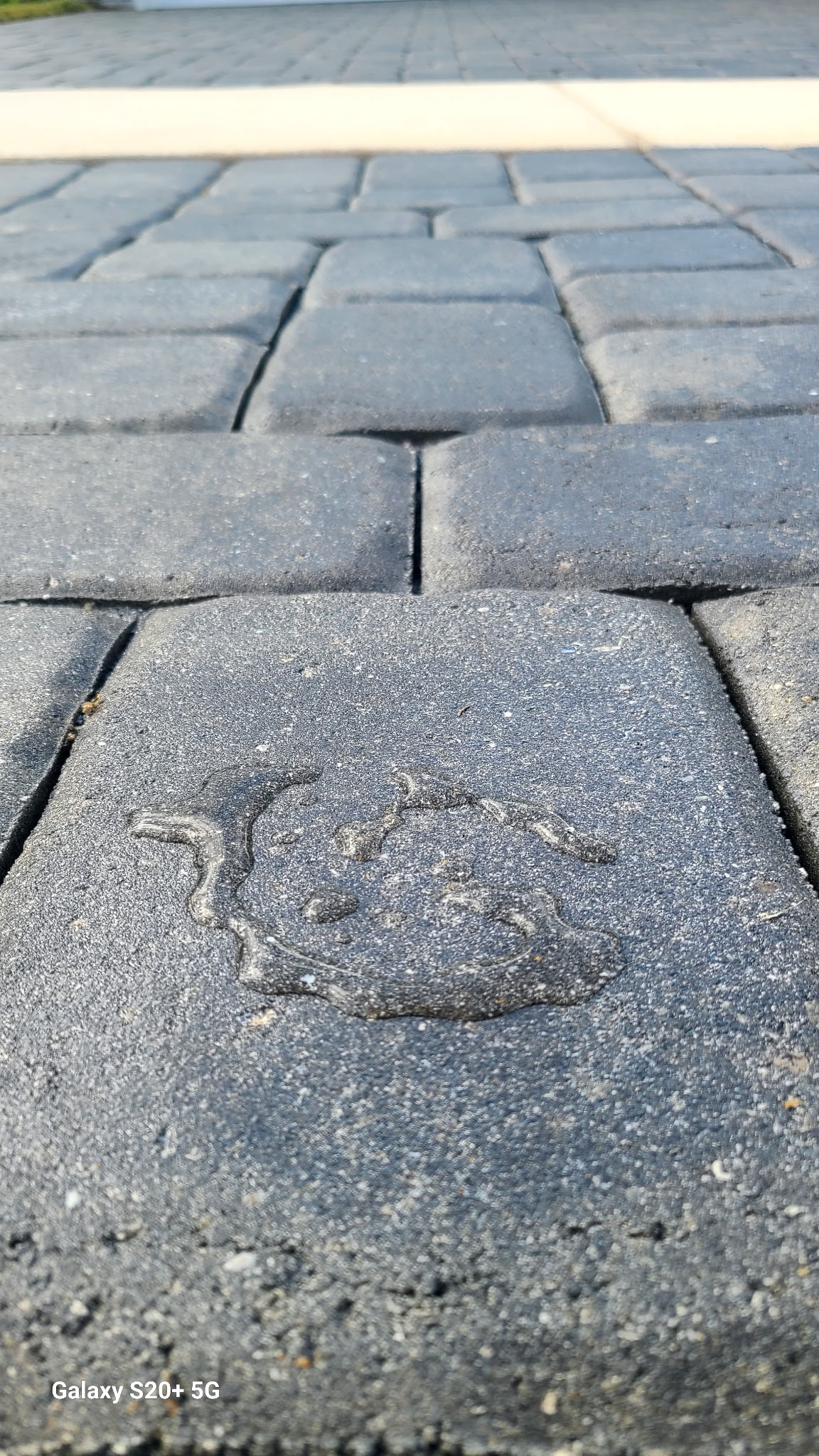
Fertilizer and sprinkler stains are one of the most common paver problems in Port St. Lucie. They can leave rust-colored, green or gray marks that stand out on light stone. The right approach depends on what caused the stain, and some stains need a gentle touch.
What Causes Stains on Pavers
Fertilizer is a frequent culprit. Granules can land on pavers during a lawn application, and then rain or watering breaks them down. The residue can leave dark or colored marks in the surface and in the joints. Sprinklers cause another common problem. Mineral-rich water leaves deposits as it dries, especially where a head sprays directly onto the pavers.
Other sources include leaves, tree sap and soil that washes up during storms. Each one leaves a different look. A quick look at the stain's color, edges and location can help you guess where it came from.
Why Color Matters
Rust-colored or brown stains often come from iron in water or from fertilizer. Green tints usually mean algae or other organic growth. Gray or white marks can be mineral deposits. Knowing the likely cause tells you what kind of cleaning makes sense. Using the wrong product can make a stain worse or set it deeper into the paver. Take a photo of the stain before you start. It gives you a reference point and helps you see how much progress you make.
Start With the Gentle Options
For a light stain, begin with the least aggressive approach. Rinse the area with plain water and a soft brush. Work in small sections so the surface never dries with a film of soap. Many stains lift this way when they are fresh. Older stains usually need more time and a stronger method.
Test any cleaner on a small hidden area first. Check the color, the texture and whether the joint sand moves. A test patch shows you what the surface can handle before you treat the whole walkway.
When Stronger Cleaning Is Needed
Some stains need a paver-safe cleaner and a controlled rinse. Pressure washing can help, but the pressure has to match the paver type. Too much force can etch the surface, wash out joint sand or leave light streaks. Soft washing or a lower setting often works better on delicate stone.
Travertine, natural stone and older concrete pavers need extra care. These surfaces can stain or etch more easily than dense modern pavers. Ask whether the crew has a plan for each surface type on your property.
Protecting Your Pavers From Future Stains
- Adjust sprinkler heads so they do not spray the pavers directly.
- Sweep up fertilizer granules that land on hard surfaces.
- Rinse away spills from fertilizer, mulch or leaves soon after they happen.
- Keep gutters and downspouts from draining onto the paver area.
- Clean the surface on a regular schedule so deposits do not build up.
How Sealing Helps
A good sealer can make pavers easier to clean and may help them resist some stains. Sealing is not a cure for every mark, and it works best on a clean surface. Ask about the sealer type, the finish and how often the surface should be resealed. Our paver sealing service covers the steps that prepare the surface before any sealer goes on.
Joint Sand and Water Flow
Stain removal can wash out joint sand. Once the sand is gone, weeds can grow and pavers can shift. After cleaning, check the joints and refill sand if needed. Sand that washes out is easy to replace, but it is best to fix it before weeds take hold. Plan a quick check a few weeks after cleaning so you can catch gaps early. Good water flow matters too. Standing water can leave marks, so look for low spots where the surface holds moisture.
When to Call a Pro
Call a professional when stains are large, deep or spread across the whole driveway or patio. Call if you have already tried a cleaner and the stain returns, or if you are unsure which product is safe for your surface. A professional can test, clean and check the joints in one visit.
Questions to Ask Before You Hire
- What type of paver is on my property, and how will you clean it?
- What cleaner will you use, and how do you protect nearby plants?
- Will you check the joint sand after cleaning?
- Do you offer sealing after the stain is removed?
- What should I do between cleanings to prevent new stains?
Serving Port St. Lucie and Nearby Areas
JB Powerwash Services is based in Port St. Lucie, FL. We serve Port St. Lucie, Tradition, St. Lucie West, Fort Pierce, Stuart, Palm City and Jensen Beach. We offer paver cleaning and sealing along with house washing, roof soft washing and driveway cleaning. Our approach includes soft washing for roofs and delicate surfaces, so we can match the method to the material. If you want to read more about this area, see our guide on paver sealing in Port St. Lucie.
Ready to get those stains under control? Call 954-652-9551 for a free estimate. We will look at your pavers, explain what is causing the stain and recommend a safe plan.
Frequently Asked Questions
What causes fertilizer stains on pavers?
Granules left on the surface can break down in rain or watering and leave colored residue. Fertilizer that washes into joints can also leave marks.
Why do sprinklers leave white or gray marks?
Mineral-rich water leaves deposits as it dries, especially where a sprinkler head sprays directly onto the pavers.
Can pressure washing damage pavers?
It can if the pressure is too high. Too much force can etch the surface or wash out joint sand, so the method should match the paver type.
Do you offer free estimates?
Yes. JB Powerwash offers free estimates and will look at your pavers before recommending a plan.