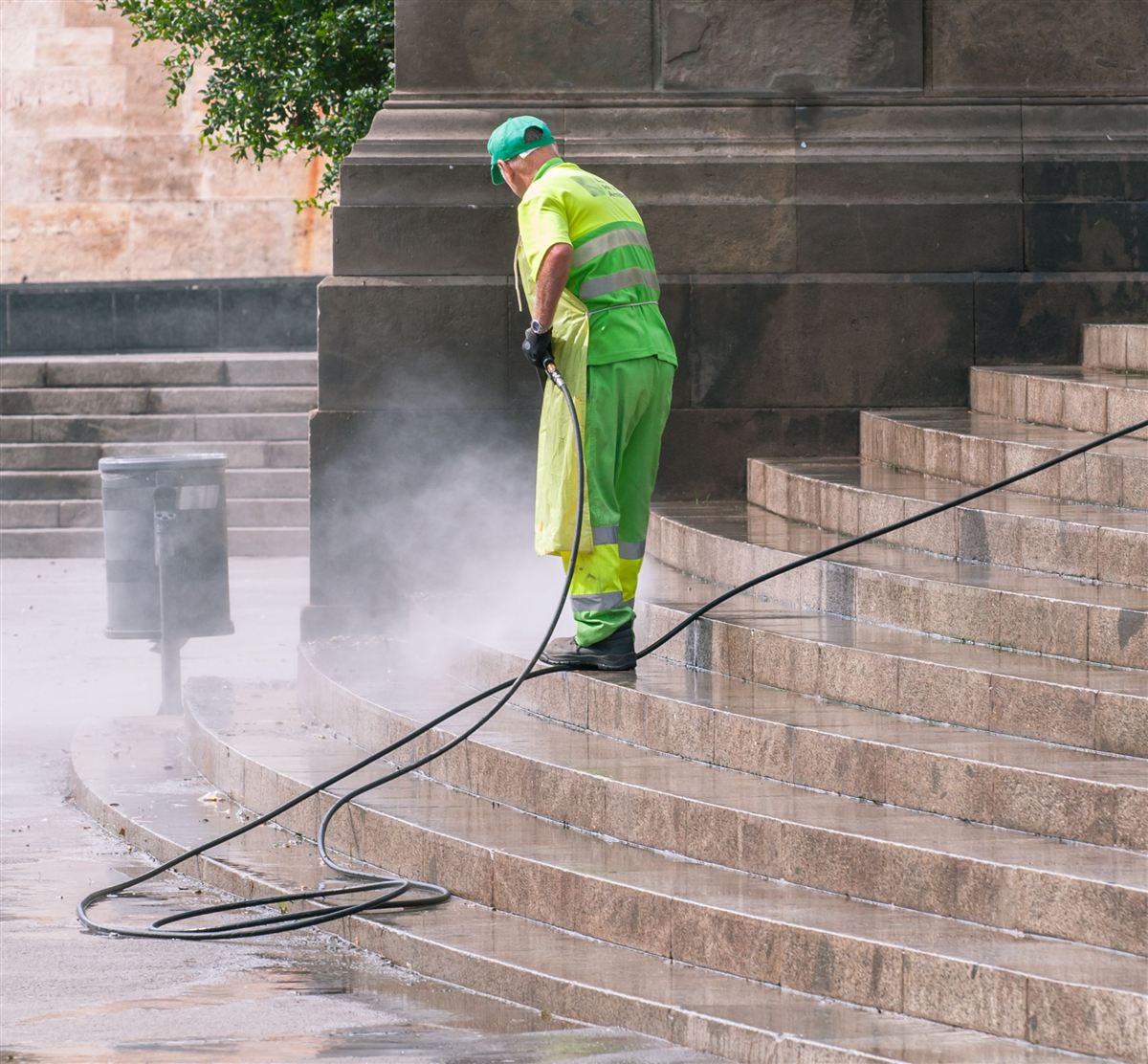
Stripes on a concrete driveway after pressure washing are usually caused by uneven cleaning, not by the concrete itself. Light and dark bands, often called zebra striping, show where pressure, speed or overlap changed as the cleaner moved. The good news is that most stripes come from technique, and many can be softened with a careful second pass.
If your driveway in Port St. Lucie or nearby looks uneven after a wash, you are not alone. Concrete shows stripes quickly, and sun and salt air can make them stand out. Here is what causes the problem and how to get a clean, even finish.
What Causes Zebra Striping
Zebra striping appears when part of the surface gets more cleaning than the rest. Each pass of the wand or surface cleaner removes a thin layer of dirt, algae and grime. If one pass overlaps the last one more than the others, that strip cleans more and looks lighter. Stripes can also form when the wand moves in a jerky pattern or pauses in one place.
Concrete is porous. It absorbs water and dirt unevenly, so even a good pass can leave slightly different shades. Dirt that has built up for a long time shows the problem more than a light film does. This is why a driveway can look fine while it is wet and then show stripes once it dries.
Common Mistakes That Cause Wand Marks
- Holding the wand at changing angles. A tilt that shifts mid-pass changes the force on the surface.
- Moving too fast in some areas and too slow in others. Speed controls how much dirt comes off.
- Holding the wand too close to the surface. High force in one spot can etch or lighten the concrete.
- Overlapping inconsistently. Gaps leave dirty lines, and heavy overlaps leave light ones.
- Starting and stopping in the middle of the driveway. Each stop can leave a mark.
Why Surface Cleaners Help
A surface cleaner is a flat, wheeled tool that attaches to the pressure washer. It keeps the nozzle at a set height above the concrete, so the cleaning stays more even. Many homeowners find this tool gives a more uniform result than a hand wand. A surface cleaner still needs to move steadily, though. Pushing it too fast or pausing can leave lines.
Some stripes also come from the surface cleaner's own path. If the cleaner starts and stops at the same spots, the marks can line up across the slab. Keep a steady pace from one end of the driveway to the other, and overlap each pass by a consistent amount.
How a Pro Gets an Even Finish
An experienced operator works in a planned pattern. The pass direction stays consistent, the overlap stays steady, and the tool moves at a set speed. The operator also checks the surface as the work goes, looking for light and dark patches. Water flow, pressure and distance to the concrete are adjusted to match the surface and the level of dirt.
Preparation matters too. Sweeping loose debris, wetting the surface and pre-treating heavy spots before the main wash help the cleaning go evenly. Cars, planters and furniture should be moved out of the way. Nearby plants should be covered or rinsed, and runoff should be considered before the work begins.
How to Fix Stripes That Are Already There
If your driveway already has stripes, start with a careful rinse to remove loose dirt and any leftover residue. Let the surface dry, then look at it in good light. Often a second pass with steady speed, even overlap and the right distance will blend the lines. Work in small sections so you can check the result as you go.
Some stains do not respond to pressure alone. Oil, rust and deep organic stains may need a targeted approach. Be careful with strong chemicals and high pressure on concrete. Too much pressure can etch the surface and create a new problem. When in doubt, test a small area first and look at it once it dries.
Prevent Stripes on Your Next Wash
- Sweep the driveway before you start.
- Use a surface cleaner for large flat areas when possible.
- Keep a steady walking speed and a consistent overlap.
- Avoid stopping in the middle of a pass.
- Rinse the whole surface evenly at the end.
Driveways and Sealing
Some homeowners seal a driveway after washing to help it look even and resist future stains. Sealers can change the color of concrete, so test a small area first. Let the surface dry completely before sealing, and follow the product instructions. Ask your contractor whether sealing makes sense for your driveway and your climate.
If you want a closer look at your driveway, our pressure washing services page covers driveway and concrete cleaning. Homeowners in Jensen Beach can also visit our Jensen Beach pressure washing page for local details.
JB Powerwash Services is based in Port St. Lucie and serves Port St. Lucie and St. Lucie County. We clean driveways and concrete, roofs with soft washing, house exteriors, pavers, pool cages and lanais, and commercial properties. Call Juan at 954-652-9551 to request your free estimate for driveway cleaning in Port St. Lucie.
Frequently Asked Questions
Why does my driveway have stripes after pressure washing?
Stripes usually come from uneven pressure, speed or overlap as the cleaner moved. Concrete is porous, so small differences in cleaning show up as light and dark bands.
Can stripes be fixed?
Often, yes. A careful rinse and a second pass with steady speed, even overlap and the right distance can blend the lines. Test a small area first.
Is a surface cleaner better than a hand wand?
A surface cleaner keeps the nozzle at a set height, which usually gives a more even result. It still needs to move steadily to avoid leaving lines.