A dumpster pad that is never cleaned will collect grease, food waste, and grime. Over time, that buildup brings odors, pests, and slippery spots that can put staff and customers at risk. Regular pressure washing and degreasing keep the concrete clean, safe, and easier to manage.
Why Dumpster Pads Get So Dirty
A dumpster pad sits in one spot, and every trip to the bin adds to the mess. Liquid spills, drips from bags, and splashes from lids all land on the same concrete. Grease is the hardest part to remove. It soaks into the surface and holds dirt, dust, and food particles like glue.
Restaurants face the most buildup. Fryer oil, sauces, and food scraps find their way outside. Plaza dumpster pads often serve several businesses at once, so the mess grows faster than any single owner can keep up with. Without a plan, the pad can turn into a constant problem.
The Problems Dirty Pads Cause
Odor is the first problem most people notice. Rotting food and grease give off smells that can drift into nearby doors and windows. Those smells can drive away customers before they ever walk inside.
Pests come next. Flies, roaches, rodents, and stray animals are drawn to food waste and grease. A dirty pad gives them a steady source of food and water. Once they settle in, they can be hard to remove.
Slippery spots are a safety issue. Grease on concrete can turn a simple trip to the bin into a fall. Staff carry heavy bags and bins. A slip while hauling trash can cause a serious injury and a lot of trouble for the business.
How Pressure Washing Helps
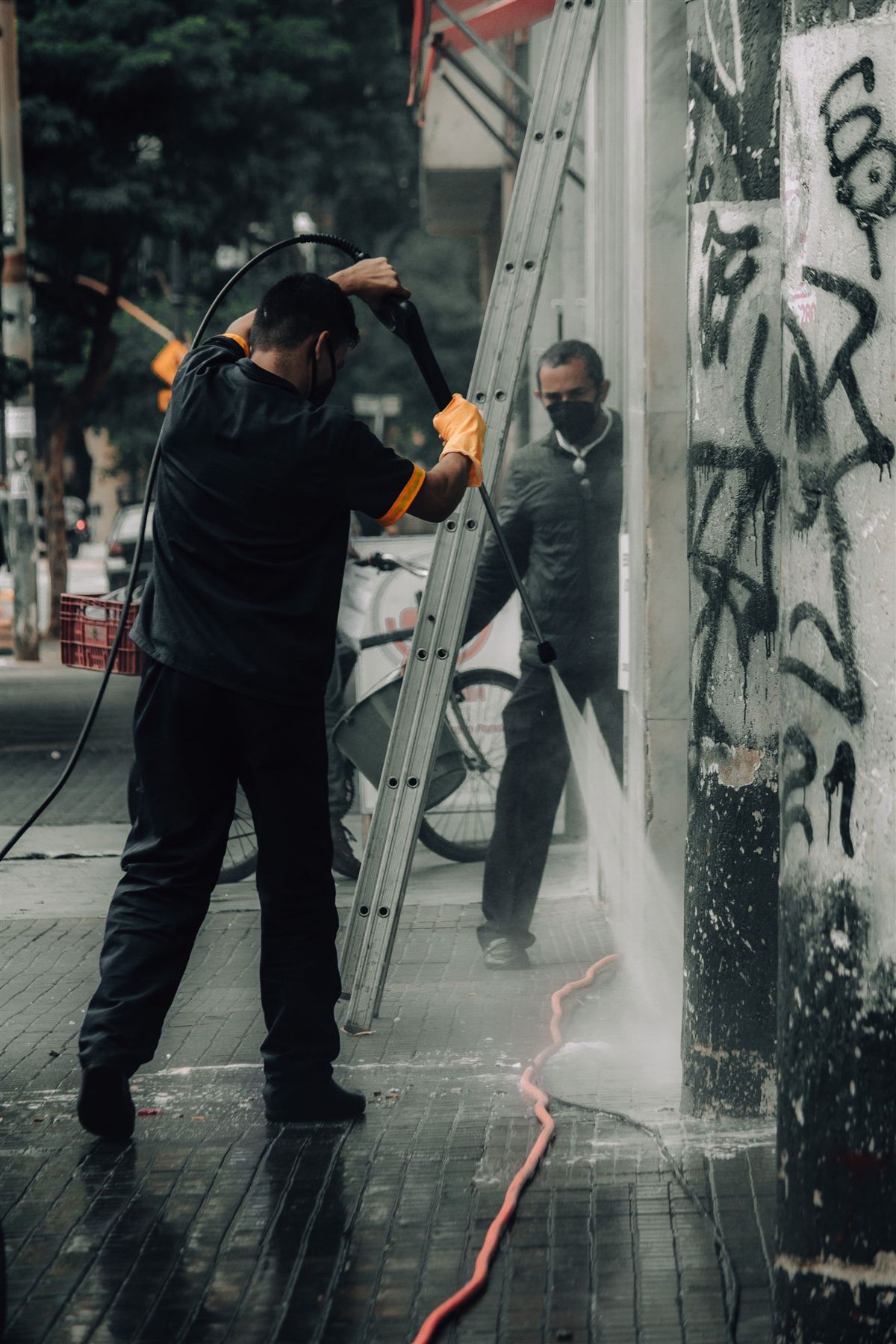
Pressure washing removes the built-up grime that scrubbing alone cannot reach. The right equipment lifts dirt out of the pores of the concrete. A degreaser breaks down the oily layer so the water can carry it away. The result is a cleaner surface and a fresher smell.
Good cleaning also looks at the surrounding area. The apron in front of the bin, the curb, and any drain lines should be checked. Standing water and clogged drains can add to the odor and attract pests. Clear them as part of the job.
How Often Should a Dumpster Pad Be Cleaned?
The right schedule depends on how busy the business is. A high-volume restaurant needs more frequent cleaning than a small office. Plaza pads shared by several businesses may need a set plan that everyone follows. Talk with your cleaning company about how often your pad should be cleaned, and keep the schedule consistent.
Between professional visits, you can help. Keep lids closed, bag food waste tightly, and clean up spills right away. Sweep the apron after busy shifts. Small habits make each professional cleaning last longer.
Check Local Rules Before You Clean
Washing water that carries grease can cause problems if it runs into storm drains or the wrong areas. Rules about wastewater and grease can vary by city and county. Ask your local government or property manager what is allowed. A responsible cleaning company will plan the work with those rules in mind.
If your pad sits near a storm drain, ask how the runoff will be handled. Containment, controlled washing, and proper cleanup are all part of a careful job.
What to Ask a Cleaning Company
- Do you use a degreaser that is right for commercial concrete?
- How do you protect nearby drains and landscaping?
- Can the work be scheduled outside business hours?
- How often do you recommend cleaning my pad?
- Do you clean the apron, curb, and surrounding area too?
Clear answers to these questions help you compare options. Ask for a clear description of the work before you agree to a schedule.
Plan Cleaning Around Your Business Hours
Many restaurants and plazas prefer to clean the pad when the area is quiet. Early morning or late evening work keeps customers and staff out of the way. It also gives the concrete time to dry before the next day of trash pickup. Ask your provider whether it can work outside business hours and how it will keep the area safe while the crew is on site.
Cleaning Is Part of Good Property Care
A clean dumpster area tells customers and neighbors that the property is well run. It supports food safety, staff morale, and the look of the whole plaza. It also reduces the chance of costly repairs to concrete that has been left to stain and crack.
Regular care also helps the surface last longer. Concrete that is cleaned and kept free of grease holds up better over time. Stains are easier to remove when they are caught early.
Working With JB Powerwash Services
JB Powerwash Services serves Port St. Lucie and St. Lucie County. We offer commercial pressure washing, along with roof soft washing, driveway and concrete cleaning, paver cleaning and sealing, and pool cage and lanai cleaning. We use soft washing for roofs and delicate surfaces, so each job gets the right method.
If your business has a pad that needs attention, our pressure washing services page explains what we offer. You can also read our guide to commercial pressure washing for Port St. Lucie storefronts to see how we approach busy properties.
Ready to get your dumpster pad clean? Call JB Powerwash Services at 954-652-9551. Free estimates are available, so you can review the plan before any work begins. We serve Port St. Lucie, Tradition, St. Lucie West, Fort Pierce, Stuart, Palm City, and Jensen Beach.
Frequently Asked Questions
Why does my restaurant dumpster pad smell so bad?
Grease, food waste, and spills soak into the concrete and rot over time. Regular pressure washing and degreasing remove the buildup that causes odor.
How often should a dumpster pad be pressure washed?
It depends on how busy the business is. High-volume restaurants usually need more frequent cleaning than small offices. Ask your provider for a schedule that fits your site.
Can grease from a dumpster pad go down a storm drain?
It should not. Ask your city or county what is allowed, and make sure your cleaning company controls runoff and cleans up after the work.
Do you offer free estimates for commercial pads?
Yes. JB Powerwash Services offers free estimates, so you can review the scope of the work before you agree to a plan.