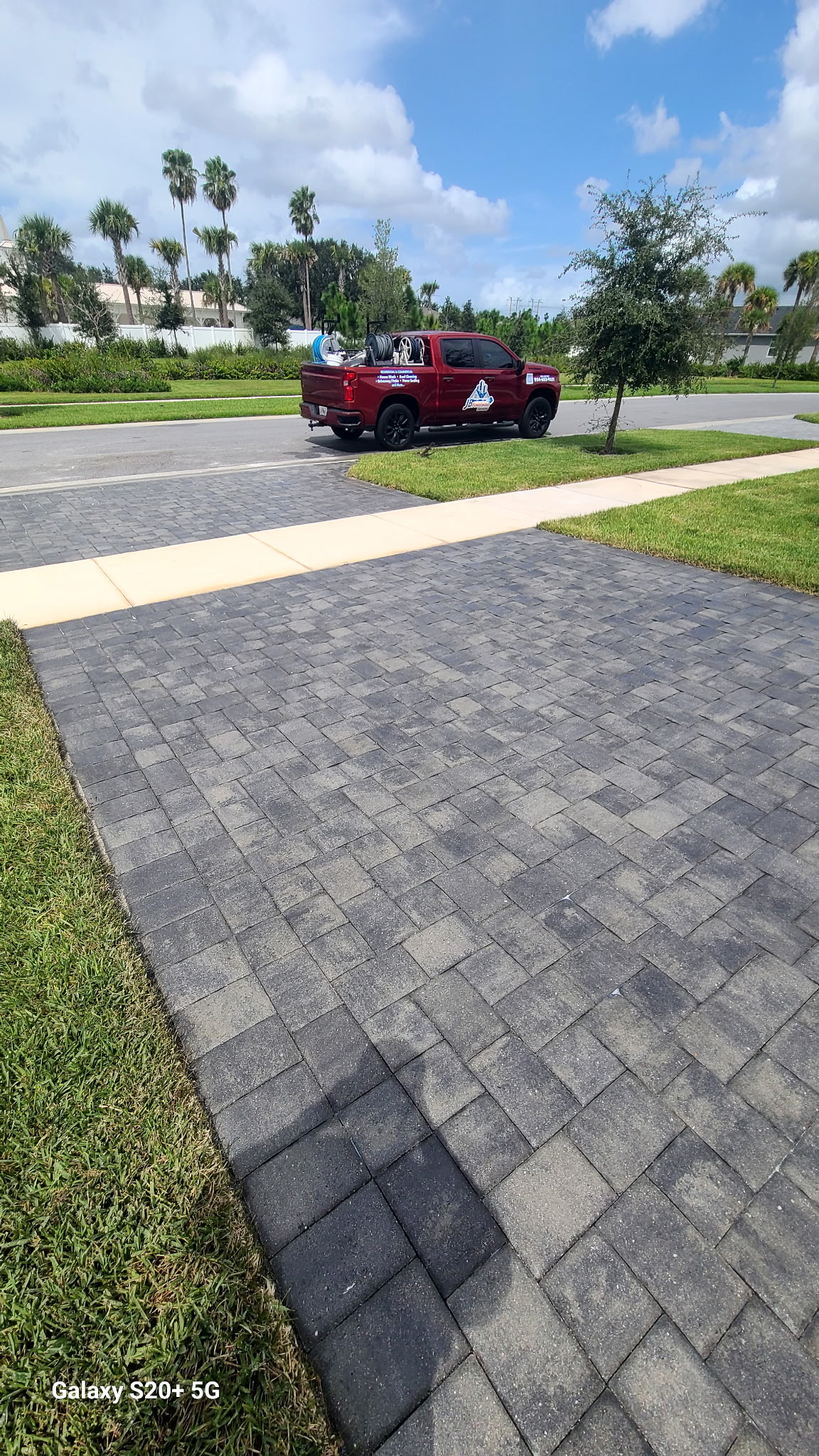
A brick paver driveway can look great for years, but it does not stay clean on its own. Tire marks, oil drips, dirt, and mildew all settle into the surface and the joints between the pavers. Cleaning restores the color, and the right follow-up steps keep the driveway looking good longer. This guide explains what affects the job in Stuart and what to expect from a proper paver driveway cleaning.
Why Paver Driveways Get Dirty Faster
Pavers have many small joints. Each joint holds sand, and that sand holds dirt, leaves, and moisture. In a humid coastal climate, the joints stay damp longer, and mildew and green growth can take hold. Cars leave tire marks and oil drips that soak into the surface. Over time, the whole driveway can look gray, blotchy, or worn.
Palm City, Stuart, and Jensen Beach see plenty of sun, rain, and salt air. Those conditions speed up the buildup. A driveway that sits under trees or near a sprinkler line often needs cleaning more often than one in an open yard.
Common Stains on a Paver Driveway
Different marks need different care. Knowing what you are looking at helps you ask the right questions before the work starts.
- Tire marks. These are dark streaks left by vehicles. They sit on the surface and can often be lifted with the right cleaning method.
- Oil and fluid drips. Oil soaks into the paver. It may need a targeted treatment before the general wash.
- Mildew and algae. These grow in shaded spots and in the joints. They make the surface look dark and feel slick.
- Rust from metal items. Lawn furniture or tools left on the driveway can leave rust spots that need special care.
- Dirt in the joints. Packed dirt and loose sand in the joints hold moisture and make growth worse.
Some stains look worse than they are. A thorough cleaning often lifts more than homeowners expect. Ask your crew to test a small area first, so you can see the result before the full job is done.
How a Proper Cleaning Works
A good paver driveway cleaning follows a clear order. The crew starts by checking the surface, the joints, and any stains. They sweep away loose debris and move cars, planters, and small items out of the way. They also protect nearby plants, lights, and walls from overspray.
Next comes the wash. Pressure has to be matched to the paver type and condition. Too much force can damage the surface or wash out the joint sand. Too little may leave stains behind. Crews also pre-treat oil and mildew, let the solution work, and rinse the surface carefully. Ask how they plan to adjust the wash for your driveway.
Why Joint Sand Matters
The sand between the pavers locks the bricks in place. It also keeps water from moving under the surface. When the joints are washed too hard or when the sand is old and thin, the sand can wash out. That leaves gaps, weeds can grow in them, and the pavers can shift over time.
Ask whether the crew will re-sand the joints after cleaning. Re-sanding fills the gaps with fresh sand and helps the pavers stay tight. It is a simple step, but it makes a real difference in how the driveway looks and performs.
Re-Sanding After Cleaning
After the driveway dries, the joints are ready for new sand. The crew sweeps the sand into the gaps, works it in, and removes the excess from the surface. Then they wet the area lightly to settle the sand. This step should be done once the surface is fully dry, so the sand moves into the joints properly.
If you skip re-sanding, the joints may look empty. That can make the driveway look unfinished. It can also let more water and debris settle into the gaps.
Sealing Your Paver Driveway
Sealing is the step many homeowners ask about. A sealer helps protect the surface from stains and helps keep the color bright. It also makes future cleanings easier. The sealer is applied after the driveway is clean, dry, and fully re-sanded. Timing matters. Sealing too early can trap moisture, and sealing too late may leave the surface exposed.
Ask which sealer your crew recommends and why. A good answer will talk about the paver type, the look you want, and how the sealer handles sun and rain. It will also explain how often the driveway should be cleaned after sealing.
Tire Marks and Oil: Quick Tips
You can help keep the driveway clean between professional visits. Park on a mat or drip pan when you can. Clean up oil spills right away with an absorbent material. Avoid using harsh chemicals on the surface, since they can discolor the pavers. Rinse off salt and sand after a day at the beach. These habits add up over time.
Why Stuart Driveways Need Extra Attention
Stuart homes often sit close to water and see strong sun. Salt air settles on the surface and dulls the color of the pavers. Humidity keeps joints damp longer than in drier areas. A regular cleaning schedule helps keep these problems from building up. Many homeowners find it easier to clean a few times a year than to wait until the driveway looks badly worn.
Choosing the Right Team
A paver driveway is a big part of your home's curb appeal. Choose a crew that asks questions about the surface before it starts. Look for a company that explains the process in plain words, tests stains first, and talks about joint sand and sealing. JB Powerwash Services serves Port St. Lucie and St. Lucie County, including Stuart, Palm City, and Jensen Beach. We offer free estimates for paver and driveway work.
If you want to learn more about our sealing work, see our paver sealing page. For a wider look at how we clean the outside of your home, visit our pressure washing services in Stuart.
Next Steps
A clean paver driveway makes the whole home look well cared for. Start by noting the stains and the condition of the joints. Ask about the cleaning method, re-sanding, and sealing. To request a free estimate for your paver driveway in Stuart, call JB Powerwash Services at 954-652-9551 and we will look at your driveway with you.
Frequently Asked Questions
Will pressure washing damage my pavers?
It can if the pressure or method is wrong for the paver type. A skilled crew adjusts the wash to protect the surface and the joint sand.
Why do I need to re-sand the joints?
Cleaning can wash sand out of the joints. Fresh sand locks the pavers in place and keeps water and weeds from settling into the gaps.
When should I seal my paver driveway?
Seal after the driveway is clean, dry, and re-sanded. Your crew can explain the right timing for your surface and sealer.
Can you remove oil stains from pavers?
Many oil stains can be lightened with a targeted treatment before the general wash. Test results vary, so ask the crew to check a small area first.